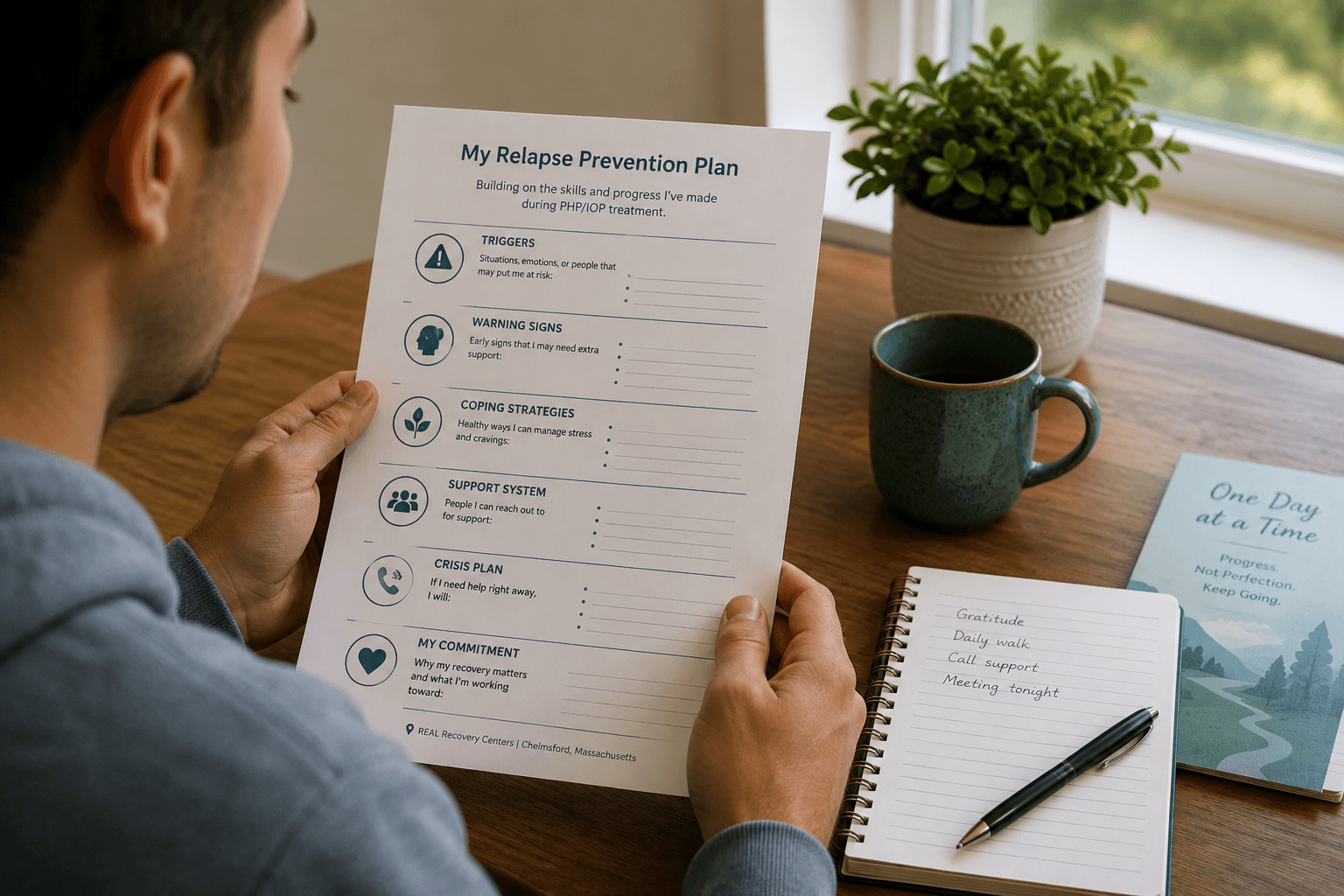

Emotional ups and downs can make recovery feel unstable. Many people in Massachusetts want support that helps them understand their feelings and respond with more confidence. Dialectical behavior therapy in Massachusetts is a powerful option because it builds emotional skills that support long-term sobriety and healthier relationships.
Local outpatient programs, including Real Recovery Centers in Chelmsford, often use DBT to help clients strengthen emotional balance, rebuild communication skills, and manage triggers with greater clarity. These tools are especially helpful for people navigating trauma, stress, or emotional patterns that make recovery harder.
What Is Dialectical Behavior Therapy (DBT)?
DBT blends acceptance with practical tools for change. It teaches people how to sit with difficult emotions while responding in healthier, more intentional ways.

DBT shares similarities with CBT, but DBT goes further by targeting emotional instability, impulsive reactions, and communication challenges. This makes it especially helpful for people in recovery who often experience emotional swings or difficulty managing stress.
The Four Core DBT Skills
1. Mindfulness
Teaches people to slow down, observe their feelings, and stay grounded during emotional spikes.
2. Distress Tolerance
Helps someone get through overwhelming moments without acting on urges or turning to substances.
3. Emotion Regulation
Offers techniques to understand, name, and balance emotions before they build into crisis.
4. Interpersonal Effectiveness
Supports healthy communication and boundary-setting, which strengthens relationships during recovery.

Dialectical behavior therapy in Massachusetts teaches emotional regulation, distress tolerance, mindfulness, and communication skills. These tools help people in addiction recovery manage triggers and reduce impulsive behaviors. DBT supports stability by helping individuals identify emotions early and respond with healthier, more grounded actions.
How DBT Supports Addiction Recovery
Recovery often brings intense emotions to the surface. Stress, relationship conflict, shame, and past trauma can create situations that feel overwhelming. DBT provides structure so people can understand what they feel and make safer choices.
Managing Triggers With Emotional Skills
Many individuals used substances to numb emotions. DBT replaces that pattern with coping skills like grounding, paced breathing, and the STOP technique. These strategies help reduce impulsive reactions and support relapse prevention.
You can learn more about physical and emotional changes that show up early in sobriety from resources such as information on common drug withdrawal symptoms.

Comparing DBT With Other Treatment Approaches in Massachusetts
People often compare DBT with other treatment models to understand what fits best with their needs.
DBT vs. CBT
CBT focuses on reshaping unhelpful thoughts. DBT supports those changes while adding skills for emotional stability and communication.
DBT vs. MAT
Medication-Assisted Treatment addresses cravings and withdrawal. DBT strengthens emotional and behavioral skills that support sobriety alongside MAT.
DBT vs. Group Therapy
DBT skills help someone communicate more effectively and feel more grounded, which often leads to better participation in group therapy sessions.
If you are exploring local treatment options, you may also find comparisons helpful in guides like intensive outpatient program options.
Additional educational resources, such as details on the risks of combining gabapentin and hydrocodone, provide insight into safety concerns that relate to emotional and physical health during recovery.
Integrating DBT With Other Therapies in Massachusetts
DBT is rarely used alone. It works best when combined with a full treatment plan.
Group Therapy
Helps people practice communication, assertiveness, and emotional honesty.
Family Therapy
Rebuilds trust and helps loved ones learn supportive communication styles that match DBT principles.
CBT and Motivational Interviewing
Adds behavioral tools and strengthens motivation throughout recovery.

These combinations give clients more ways to handle triggers, manage stress, and stay engaged in recovery.
FAQs About DBT in Massachusetts
Who benefits most from DBT?
DBT is helpful for anyone with intense emotions, trauma history, impulsive behaviors, or substance use patterns tied to emotional distress.
How long does DBT last?
Most DBT programs last several months, though people often start noticing improvements as they practice skills daily.
Does DBT help with cravings?
Yes. Because cravings often connect to stress or strong emotions, DBT tools can reduce vulnerability to urges.
Is virtual DBT available in Massachusetts?
Many outpatient programs offer virtual sessions, though availability varies by provider.
Does insurance cover DBT?
Most insurance plans, including MassHealth, offer behavioral health coverage. You can request benefit verification during intake.
Find Emotional Balance With DBT in Massachusetts
DBT helps people build the emotional skills that support lasting recovery. By practicing mindfulness, communication tools, and distress tolerance, individuals often feel more grounded and confident in managing daily stress. If you or someone you love is ready to strengthen emotional stability, our Chelmsford team is here to help. Call Real Recovery Centers today to verify insurance or learn more about DBT and outpatient treatment options.