
When you started using at 16, it wasn’t about escaping adult responsibilities you didn’t yet have. It was about fitting in at parties where everyone seemed comfortable, but you did. Managing anxiety about college applications, social acceptance, or family expectations. Experimenting because that’s what this developmental stage involves, but your experimentation became something else entirely before you understood what was happening.
Now you’re 22, and traditional addiction treatment keeps talking about rebuilding careers you haven’t established, repairing decades-long marriages you’ve never had, and reconnecting with children you don’t have. The counselor is 55 and references cultural touchstones you don’t recognize. The other clients are dealing with mid-life crises while you’re still trying to figure out who you are in the first place.
This is May, Mental Health Awareness Month, and young adults in Massachusetts who’ve developed substance use disorders before their mid-twenties deserve treatment that recognizes their unique developmental position. You’re not just younger versions of the adults in traditional treatment. You’re navigating life stages that are distinct from what older adults face, with challenges that require approaches designed for where you actually are right now, not where a 45-year-old is.
Research demonstrates that young adult addiction treatment must address ongoing brain development, emerging identity formation, peer relationship dynamics, and life trajectory concerns that don’t apply to older adults. When treatment ignores these factors, it fails young people at exactly the moment when effective intervention could prevent decades of struggle.
Why Your Developing Brain Makes Everything Different
Your brain won’t finish developing until your mid-twenties. The prefrontal cortex, responsible for impulse control, decision-making, risk assessment, and emotional regulation, is literally still under construction. This isn’t excuse-making. It’s neuroscience explaining why substance use affects young adults differently than it affects people whose brains finished developing before they started using.
When adults develop addiction after age 25, they’re introducing substances to a fully formed brain. The addiction rewires existing neural pathways. For young adults using regularly during late adolescence and early adulthood, substances are present during the actual construction of those neural pathways. Your brain is learning how to function with substances integrated into its basic operating system.
This has real implications. Impulse control that most 40-year-olds take for granted hasn’t fully developed yet in your age group. The ability to envision long-term consequences and prioritize future rewards over immediate pleasure is still emerging. The capacity to regulate intense emotions without external support isn’t fully online. These aren’t character flaws. They’re developmental realities that make young adult addiction both more likely to develop and different to treat.
Research from Massachusetts General Hospital published in Pediatrics in 2025 studied 11,649 young people aged 13 to 26 who started buprenorphine for opioid use disorder. The findings showed only one in four maintained high adherence to medication for a full year. Those who remained adherent had almost half the risk of overdose compared to those who discontinued early. The challenge isn’t just getting young people into treatment. It’s providing treatment structured around developmental realities that make sustained engagement difficult.
Real Recovery Centers’ Massachusetts programs recognize that young adult treatment can’t simply replicate adult approaches with younger clients. The Intensive Outpatient Program structures treatment to fit young adult schedules, developmental needs, and peer relationship dynamics that are distinct from those of older adults.
The Social Context Young Adults Can’t Ignore
When you’re 45 and getting sober, your social circle typically includes other adults who don’t center their lives around substance use. Sure, there’s social drinking, but it’s not the primary activity. You have enough life established that changing your relationship with substances doesn’t mean losing your entire social world.
At 22, your entire social infrastructure may revolve around substance use. The friends you’ve made since high school. The college parties where connections formed. The dating relationships that started at bars or through drug connections. The identity you’ve built as someone who parties, someone who’s fun, someone who’s not boring like the sober people.
Choosing recovery at this age often means losing your complete social network simultaneously, at exactly the developmental stage where peer acceptance feels absolutely critical. You’re not just giving up substances. You’re potentially giving up everyone you know and everything familiar about how you spend time.
Research examining adolescent substance use treatment published in 2025 found that only 30.8 percent of adolescents aged 12 to 17 with opioid use disorder received any treatment in the past year. For young adults 18 to 26, the treatment gap remains significant. Part of this gap comes from young people recognizing that available treatment will require social isolation they can’t manage at this developmental stage.
Effective young adult treatment must address this social reality rather than pretending it doesn’t exist. Group therapy with age-appropriate peers becomes essential, not optional. You need to build new social connections with people your age who understand recovery, not just sit in groups with middle-aged adults whose life circumstances share nothing with yours.
Real Recovery Centers provides age-appropriate programming where young adults work with counselors who understand current youth culture, social media dynamics, dating realities, and the specific pressures Massachusetts young people face. The treatment team recognizes that telling a 21-year-old to “just find new friends” without providing actual pathways to age-appropriate sober communities sets up isolation and relapse.

Identity Formation When Your Identity Includes Addiction
Erik Erikson’s developmental psychology describes late adolescence and early adulthood as the critical period for identity formation. You’re figuring out who you are, what you value, and what you want your life to become. If substance use has been central to your life since your mid-teens, your developing identity has integrated addiction as a core component, not a problem layered on top of it.
You might identify as “the party person,” “the one who can handle their drugs,” or “the fun one who’s always down.” These identities feel like who you are, not problems to eliminate. Treatment asking you to give up substances feels like being asked to give up yourself and become someone boring, someone you don’t recognize, someone your friends won’t like.
Older adults entering recovery typically had established identities before addiction became central. They can return to some version of who they were before substances took over. Young adults often don’t have that pre-addiction identity to return to, because you were forming your identity during the years you were actively using.
This requires treatment that helps you develop new identity frameworks rather than returning to old ones. Who are you when substances aren’t your primary coping mechanism, social facilitator, or identity marker? What do you care about when you’re not planning your next use or recovering from the last one? What does fun look like when it doesn’t require being high or drunk?
Research published in Substance Use & Misuse in 2024 found that residential addiction treatment for young adults required addressing identity development specifically. Programs ignoring this developmental task saw poorer outcomes because young people left treatment without a clear sense of who they were beyond their addiction, making relapse almost inevitable when faced with identity questions they couldn’t answer.
Cognitive Behavioral Therapy (CBT) adapted for young adults helps identify thought patterns and belief systems about yourself that support substance use. Dialectical Behavior Therapy (DBT) teaches emotional regulation skills you’re still developmentally learning, accelerating the natural development that substances interrupted.
Real Recovery Centers’ BSAS-licensed programs integrate developmentally appropriate approaches that recognize young adults need help building identities rather than returning to pre-addiction functioning. The clinical team understands the specific identity challenges Massachusetts young people face in communities where substance use often seems like the only path to social connection and self-expression.
The Future You Haven’t Built Yet
Adult addiction treatment often focuses on damage control: repairing relationships, rebuilding careers, reconnecting with children, and managing health consequences that have accumulated. The narrative assumes you had something good that addiction destroyed.
Young adult treatment requires different framing. You haven’t destroyed a career. You haven’t built one yet, because you’ve been using it instead. You haven’t damaged a marriage. You haven’t been capable of sustaining serious relationships because substances were your primary relationship. You haven’t neglected children. You’re still figuring out your own life trajectory before considering major responsibilities like parenthood.
This isn’t minimizing your struggles. It’s recognizing that young adult recovery is forward-focused in ways adult recovery isn’t. You’re not rebuilding. You’re building for the first time, without the substance-based coping mechanisms that got you through adolescence and early adulthood so far.
Massachusetts young adults describe specific concerns that treatment must address: Am I too far behind my peers to catch up? How do I explain gaps in my education or work history? Will this addiction label follow me forever? Can I still have the future I imagined, or have I already wasted my chance? These aren’t questions about damage control. They’re questions about whether building a meaningful life is still possible.
A 2025 study from Boston University examining youth in Massachusetts residential treatment found that 75 percent had clinically elevated psychiatric symptoms beyond their substance use. The average age was 20.7 years. These young people weren’t just dealing with addiction. They were managing co-occurring anxiety, depression, ADHD, or trauma, all while trying to figure out basic life direction questions their peers were navigating without these additional burdens.
Real Recovery Centers’ dual diagnosis treatment addresses both substance use and co-occurring mental health conditions simultaneously. For young adults, this integrated approach is essential. Untreated anxiety or depression often drives substance use in the first place, and addressing substance use while ignoring underlying mental health issues sets up inevitable relapse.
Why Medication-Assisted Treatment Faces Unique Young Adult Resistance
Medication-assisted treatment has proven effectiveness for opioid and alcohol use disorders. For young adults with opioid use disorder in particular, medications like buprenorphine dramatically reduce overdose risk and support sustained recovery. The Massachusetts research showed young people maintaining buprenorphine adherence for 12 months had almost half the risk of overdose compared to those discontinuing early.
Yet many young adults resist MAT or struggle with adherence. The resistance isn’t about the medication being ineffective. It’s about developmental stage concerns that older adults don’t face as intensely. Young people worry about being “on drugs forever” when they’re barely starting adult life. They fear medication means they’re not really in recovery, that their peers will judge them, and that they’ll be dependent on medication during years when they’re supposed to be becoming independent adults.
These concerns aren’t irrational. They reflect legitimate developmental tasks around establishing autonomy and identity. Effective young adult treatment must address these concerns honestly rather than dismissing them. Yes, long-term medication may be necessary. Yes, that’s medical treatment, just like insulin for diabetes. Yes, recovery while taking prescribed medication is legitimate recovery.
Young adults also need help integrating medication into an identity that is still forming. Who am I if I need medication to stay alive? How do I explain this to people I’m dating? What does this mean for my future? Treatment that provides medication without addressing these developmental questions often sees poor adherence because the prescription doesn’t reach the actual barriers young people face.
Real Recovery Centers provides comprehensive education about medication-assisted treatment specifically designed for young adults, addressing concerns about independence, identity, and future implications. The medical team works collaboratively with young people to make informed decisions about medication rather than simply prescribing without addressing legitimate developmental questions.
Building Age-Appropriate Recovery Support
Traditional recovery communities can work beautifully for many adults. For young people, walking into rooms filled with people decades older discussing marriage problems, career setbacks, and parenting challenges creates alienation, not connection. You can’t relate, even though your substance use disorder follows similar patterns.
Young adults need recovery communities where peers understand current cultural references, social media realities, dating app dynamics, and the specific pressures facing their generation. Where conversations about student loans, career anxiety, and figuring out adult life feel relevant rather than foreign. Where sober socializing reflects how young people actually spend time together, not how a 45-year-old imagines it.
This doesn’t mean recovery groups focused on youth issues exclusively. But it does mean young adult programming must exist, not just adult programming with younger people uncomfortably scattered throughout. The group therapy Real Recovery Centers provides includes age-appropriate groups where peer connection happens among people facing similar developmental challenges.
Recovery also requires practical life skills many older adults already possess but young adults haven’t yet developed. How do you manage finances when you’ve never had to before? How do you hold down a job when you’ve been using during most shifts? How do you navigate conflict in relationships when substances always mediate your interactions? Adult treatment assumes these skills exist. Young adult treatment must teach them from the ground up.

Getting Started Without Waiting Until It’s Worse
Young adults often delay seeking treatment because they don’t feel “bad enough” yet. You haven’t lost everything. You’re still in school or working. Your family still talks to you. The serious consequences others describe haven’t happened. So maybe you don’t really need help. Maybe you can still figure this out on your own.
This thinking ignores how much addiction has already cost you at this developmental stage. The educational opportunities you missed while you were using. The relationships never developed beyond surface level because substances mediated all your connections. The career trajectory that stalled before it started. The identity formation that happened with addiction as a central component rather than developing who you might have become without it.
Waiting means losing years you can’t get back during the most formative period of your life. Your twenties aren’t just time passing. They’re critical years for education, relationship development, career building, and identity formation. Time lost to addiction now shapes your entire life trajectory.
Mental Health Awareness Month is a good reminder that seeking help early is smart, not dramatic. The younger you address substance use, the less entrenched it becomes, the more treatment can do, and the more of your future remains open to possibilities addiction hasn’t foreclosed.
Real Recovery Centers provides free insurance verification to help young adults and families understand coverage for age-appropriate treatment. Many insurance plans cover evidence-based treatment designed specifically for younger populations, including parent policies covering young adults up to age 26, MassHealth, BCBS, Aetna, and Cigna.
The 24/7 admissions line means you can start this conversation whenever you’re ready, not just during business hours when you’d have to miss class or work. The clinical team understands young adult concerns about confidentiality, parental involvement, academic accommodations, and employment protections.
Family therapy helps repair relationships with parents or family members while establishing adult boundaries appropriate for your age. You’re not a child needing parental control, but family support structured for your developmental stage can make a real difference.
Frequently Asked Questions
What makes young adult addiction treatment different from standard adult programs?
Young adults are in a distinct developmental stage. The brain isn’t fully formed until the mid-twenties, identity is still actively developing, and social networks often revolve around substance use in ways they don’t for older adults. Effective treatment addresses these realities directly, including peer-specific group therapy, identity formation work, and life skills development, rather than applying a middle-aged adult model to a 22-year-old.
Does insurance cover young adult addiction treatment in Massachusetts?
Most major insurance plans cover evidence-based treatment at BSAS-licensed facilities like Real Recovery Centers. This includes MassHealth, BCBS, Aetna, Cigna, and most employer-sponsored plans. Young adults up to age 26 are often still covered under a parent’s policy. Verify your coverage online at no cost, or call (978) 788-1870, and our admissions team will walk you through your benefits.
Can I attend treatment while still in college or working?
Yes. Real Recovery Centers offers a full range of flexible program levels, including the Intensive Outpatient Program, standard outpatient services, and virtual treatment options designed to fit around school schedules, jobs, and family responsibilities.
What if I have anxiety or depression alongside a substance use disorder?
This is very common. A 2025 Boston University study found that 75 percent of young adults in residential treatment had clinically elevated psychiatric symptoms beyond their substance use. Real Recovery Centers’ dual diagnosis treatment addresses both conditions simultaneously, because treating one without the other rarely leads to lasting recovery.
How do I explain a treatment gap to employers or schools?
This is one of the most common concerns young adults bring to our admissions team. Confidentiality protections are strong, and many young adults complete treatment without any disruption to academic or employment records. Our clinical team can help you think through timing, accommodations, and how to navigate these conversations.
The Life You Can Still Build
At 22, hearing “you have your whole life ahead of you” might sound hollow when you feel like you’ve already wasted the start. But it’s neurologically true. Your brain is still developing. The patterns addiction created aren’t permanent. The trajectory you’re on can change.
Young adults who address substance use in their early twenties have remarkably positive outcomes. Not just survival, but actual thriving. Education completed. Careers launched. Healthy relationships formed. Lives built on foundations of recovery rather than active addiction. The earlier you interrupt the pattern, the more options remain available.
Recovery at your age looks different than recovery at 45. You’re not reconstructing a life that fell apart. You’re constructing a life from the beginning, with the benefit of understanding addiction early enough to build something lasting. That’s harder in some ways because you don’t have a positive past to return to. But it’s also more powerful. You get to choose who you become.
Real Recovery Centers’ Partial Hospitalization Program provides intensive structure for young adults who need significant support, while the Outpatient Program offers ongoing care as you build independence. Holistic treatment approaches include mindfulness, exercise, and nutrition adapted for young adult needs and preferences.
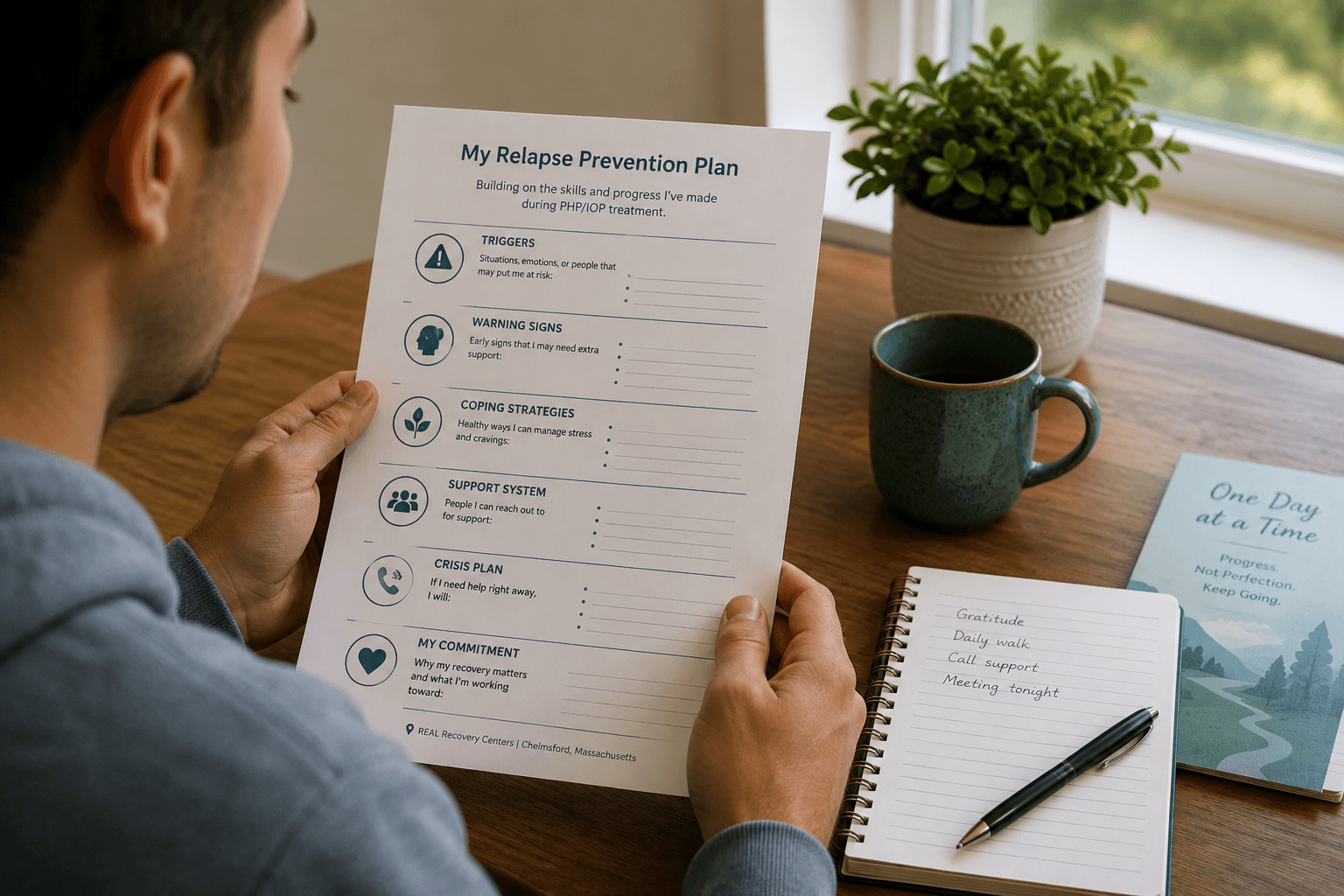
Relapse prevention planning addresses the specific high-risk situations young adults face: college parties, dating contexts, and peer pressure that looks different at your age than it does for older adults. You learn to navigate environments where substances are present without returning to use, building skills you’ll carry through your twenties and beyond.
You don’t have to wait until consequences pile up. You don’t have to lose everything before getting help. Getting treatment now, while most of your adult life remains ahead of you, means building recovery as your foundation rather than trying to add it onto years of active addiction.
Ready to address substance use during the years when treatment has the most impact? Contact Real Recovery Centers at (978) 788-1870 for confidential support, or complete our online insurance verification to understand your coverage. Our BSAS-licensed programs in Chelmsford, Massachusetts, provide age-appropriate treatment specifically designed for young adults, addressing developmental needs, peer dynamics, and life trajectory concerns that generic adult treatment ignores. We accept BCBS, Aetna, Cigna, MassHealth, and most major insurance plans.
This article is part of Real Recovery Centers’ Mental Health Awareness Month 2026 series. For more information about comprehensive addiction treatment, visit our resources on understanding co-occurring anxiety and depression, trauma-informed care approaches, family healing during recovery, and building sustainable recovery strategies.