
Chronic workplace stress is one of the leading drivers of substance use disorders in Massachusetts’ professionals. When high-pressure careers normalize daily drinking or stimulant use, the line between coping and dependence can disappear before most people recognize it. Real Recovery Centers, a BSAS-licensed treatment center in Chelmsford, provides outpatient, day treatment, and PHP programs specifically designed for working professionals in Massachusetts.
When Sunday evening anxiety about Monday morning becomes so intense that you need drinks to fall asleep, and when maintaining peak performance requires stimulants you didn’t need a year ago, something fundamental has shifted. You’re no longer managing work stress. You’re medicating it, and the line between professional demands and substance dependence has blurred into something you’re not quite ready to name yet.
This is May, Mental Health Awareness Month, and Massachusetts professionals caught in this pattern deserve an honest conversation about how workplace culture creates conditions where substance use stops being a choice and becomes the only coping mechanism you can identify. The problem isn’t that you’re weak. It’s that modern professional environments generate chronic stress levels human bodies and minds weren’t designed to sustain indefinitely without some form of chemical relief.
Research published in 2025 reveals that 82 percent of employees are at risk of burnout, marking an unprecedented crisis in workplace mental health. For professionals in high-stress Massachusetts industries like healthcare, finance, technology, and law, that risk translates into substance use patterns that start as stress management and end as full-blown addiction.
How Workplace Burnout Rewires Your Brain for Addiction
Burnout isn’t just feeling tired after a demanding week. According to the World Health Organization, burnout is an occupational phenomenon resulting from chronic workplace stress that hasn’t been successfully managed, characterized by emotional exhaustion, cynicism toward work, and reduced professional efficacy. What most people don’t realize is that this chronic stress state creates the exact neurological conditions that make addiction development not just likely but nearly inevitable.
When you’re operating under sustained workplace pressure, your brain’s stress response system stops functioning normally. Cortisol, your primary stress hormone, remains elevated far beyond healthy levels. Your reward system becomes dysregulated, requiring increasingly intense stimulation to register pleasure or satisfaction. The work accomplishments that once felt gratifying stop providing any emotional reward at all.
This creates a neurological vulnerability that substances exploit perfectly. Alcohol provides the rapid stress relief your overworked nervous system craves. Stimulants offer the artificial energy and focus needed to meet unrealistic productivity demands. What begins as occasional stress relief becomes a daily routine, then becomes a physiological necessity as your brain chemistry adjusts to expect these substances.
Research in high-stress workplace settings consistently shows that employees with substance use disorders experience not just performance declines but profound erosion of professional identity and social connection at work. The substances that initially helped you cope with stress eventually become central to your professional functioning, creating dependence you can’t easily interrupt without risking the performance collapse you’re desperately trying to avoid.
The Massachusetts Professional Pressure Cooker
Massachusetts concentrates some of the most demanding professional environments in the country. Boston’s biotech and healthcare sectors operate at a breakneck pace. The finance industry maintains cultures where 60-80 hour weeks are standard expectations, not exceptions. Technology companies compete on innovation cycles that demand constant availability and peak performance.
A 2025 survey from the American Psychological Association found that 54 percent of U.S. workers report job insecurity significantly impacts their stress levels, up from 36 percent in 2024. Economic uncertainty, layoff fears, and constantly shifting workplace policies create ongoing anxiety that compounds the baseline stress of demanding jobs.
For Massachusetts professionals, this translates into specific patterns. You’re drinking more than you planned most weeknights to decompress from high-pressure days. You’re using prescription stimulants not prescribed to you to maintain focus during long work hours. You’re relying on substances to manage anxiety about job performance or career trajectory. What started as stress management has become the foundation of how you function professionally.
The data shows this isn’t rare or unusual. Among top-level executives, approximately 11.4 percent struggle with addiction, often using stimulants for productivity enhancement and alcohol for anxiety management. Research indicates that employees working more than 48 hours per week have a significantly higher likelihood of substance use, with the combination of long hours and high responsibility creating conditions where addiction takes hold quietly.
Real Recovery Centers serves Massachusetts professionals in the Greater Lowell area who’ve reached the point where work stress and substance use have become inseparable. Our BSAS-licensed programs recognize that professional substance use requires treatment approaches that understand the unique pressures high-functioning individuals face.
You don’t have to navigate this alone. Family members watching a loved one disappear into work and substances also have support here. Our clinical team works with both individuals and families from the very first call. Learn more about how family therapy at Real Recovery supports the whole household throughout recovery.
When High-Functioning Hides High-Risk Behavior
You’re still showing up to work. Meeting deadlines. Maintaining professional appearances. From the outside, you look successful. This high-functioning presentation creates dangerous denial about how serious the problem has become. Because you haven’t experienced obvious consequences like job loss or a serious health incident, you convince yourself the substance use remains under control.
High-functioning addiction is still addiction. The fact that you’re maintaining professional performance despite substance dependence doesn’t mean you’re managing both successfully. It means you’re allocating enormous energy to sustaining appearances while your physical health, mental health, relationships, and long-term career sustainability all deteriorate beneath the surface.
Research from a 2025 American Journal of Preventive Medicine study found that employee burnout costs employers an average of $3,999 per employee annually in lost productivity and health impacts. For individuals, the costs are more than financial. Chronic stress and substance use combined create increased risk for cardiovascular disease, anxiety disorders, depression, memory impairment, and immune system dysfunction.
Massachusetts professionals often describe a specific cycle: they need alcohol to unwind enough to sleep after mentally intense days, but alcohol disrupts sleep architecture, leaving them exhausted the next morning. So they use caffeine heavily, perhaps supplemented with other stimulants, to function at work. This creates more anxiety and stress, requiring more alcohol that evening. Each day requires more substance use to maintain the same level of functioning.
The dual diagnosis treatment Real Recovery Centers provides addresses both the substance use disorder and the anxiety, depression, or burnout symptoms driving the behavior. Treating only one dimension while ignoring the other sets up inevitable relapse because the underlying stress remains unaddressed. If you’re not sure whether what you’re experiencing qualifies as a co-occurring condition, our post on understanding dual diagnosis is a good place to start.

The Substances Professionals Choose and Why
The specific substances Massachusetts professionals use follow predictable patterns based on workplace demands. Understanding these patterns helps recognize when stress management has crossed into addiction territory.
Alcohol remains the most common substance for high-stress professionals. It’s legal, socially acceptable, readily available, and provides rapid stress relief. After demanding days, alcohol offers immediate nervous system depression that feels like relaxation. But alcohol disrupts sleep quality, impairs cognitive function, and creates physical dependence with regular use. The professional who needs three glasses of wine every night to unwind is developing alcohol use disorder, regardless of whether they acknowledge it. Our alcohol addiction treatment program is designed specifically to meet working adults where they are.
Stimulants, both prescribed and illicitly obtained, help professionals maintain focus and energy through long work hours. They provide the artificial productivity boost needed to meet impossible deadlines. But stimulants create cardiovascular strain, anxiety, and dependence patterns where normal functioning without chemical assistance becomes impossible. When you can’t complete a work project without stimulants, that pattern warrants attention.
Benzodiazepines prescribed for anxiety become problematic when used daily to manage work-related stress rather than as-needed for acute anxiety episodes. The calming effect these medications provide can mask the need to address underlying stressors or change unsustainable work patterns. Physical dependence develops quickly, and withdrawal can be medically dangerous. Our benzodiazepine addiction treatment provides medically supervised support through this process.
Prescription opioids and pain medications sometimes enter the picture for professionals managing the physical toll of high-stress careers, long hours at desks, or prior injuries. What begins as legitimate pain management can quietly shift into dependence. Our prescription drug addiction treatment program understands this distinction.
Marijuana gets positioned as the “healthier” option for stress management, but regular use for emotional regulation still represents dependence. Professionals use cannabis to decompress after work, manage sleep problems caused by stress, or reduce anxiety about workplace demands. The substance itself may carry less stigma, but the pattern of needing it to function emotionally indicates the same problematic relationship.
Real Recovery Centers’ medication-assisted treatment program provides medical support for professionals whose substance use has created physical dependence requiring supervised care and pharmaceutical assistance during early recovery. This medical support addresses the physical aspects of addiction while therapy addresses the psychological and situational factors.
Why Traditional Addiction Treatment Fails Professionals
Many Massachusetts professionals who recognize their substance use has become problematic delay seeking treatment because available options don’t fit their circumstances. Traditional treatment requiring extended absences from work isn’t feasible when you can’t explain that absence without professional consequences. Standard group settings often don’t address the specific pressures professionals face.
This creates a gap where professionals continue struggling because accessible treatment doesn’t acknowledge their unique situation. You can’t just walk away from work for a month. You have financial responsibilities, career concerns, professional reputation considerations, and legitimate fears about employment consequences if your substance use becomes known.
The answer isn’t avoiding treatment. It’s finding treatment structured for professionals who need clinical intervention without destroying the careers they’ve built. Intensive outpatient programs provide structured, evidence-based treatment during days or evenings, allowing continued work attendance. Outpatient services offer ongoing support as you implement recovery strategies in your actual professional environment. And for those who need a higher level of care without full residential admission, our Partial Hospitalization Program offers intensive daytime treatment that still gets you home each evening.
For professionals who genuinely cannot step away from their desk, virtual treatment provides evidence-based care via telehealth, removing the geographic and logistical barriers that often delay treatment.
Real Recovery Centers’ Massachusetts programs recognize that professional addiction recovery isn’t about abandoning your career. It’s about learning to maintain professional performance without substances, managing workplace stress through healthier mechanisms, and addressing the underlying factors that made substance use seem necessary in the first place.
Addressing the Root Cause: Your Relationship with Work
Here’s something most treatment programs avoid saying directly: if your workplace demands remain unchanged while you stop using substances, relapse becomes likely. The job stress that drove you toward substances will still be there. Without addressing how you relate to work demands, stress, and professional identity, sobriety becomes one more thing you’re white-knuckling through an already exhausting week.
Recovery for professionals must include honest evaluation of whether your current job role, company culture, or industry standards are compatible with sustained recovery. Sometimes the answer is that fundamental changes are necessary. That might mean setting different limits around work hours. It might require negotiating different responsibilities. In some cases, it means acknowledging that your current position creates unsustainable stress regardless of your coping mechanisms.
Cognitive Behavioral Therapy helps identify the thought patterns that keep you locked in unhealthy work relationships. The belief that your worth depends entirely on professional achievement. The fear that setting limits will destroy your career. The conviction that everyone else handles this pressure fine, so your struggles indicate personal failure rather than systemic problems.
Dialectical Behavior Therapy provides specific skills for managing workplace stress without substances. Distress tolerance techniques help you sit with uncomfortable emotions without immediately reaching for chemical relief. Interpersonal effectiveness skills support setting limits with colleagues and supervisors without sacrificing relationships. Emotion regulation strategies replace substances as your primary tool for managing anxiety, frustration, or overwhelm.
The group therapy component becomes particularly valuable for professionals. Hearing other high-achieving individuals describe similar struggles with work stress and addiction breaks through the isolation that keeps you suffering alone. You realize you’re not uniquely weak for developing this problem. You learn practical strategies others have used to maintain recovery while navigating demanding careers. Our post on group therapy for addiction in Massachusetts covers what those sessions actually look like if you’ve never been in one.
Motivational Interviewing is another core tool our clinicians use with professionals. Many people entering treatment aren’t fully convinced change is necessary or possible. Motivational Interviewing meets you exactly where you are and builds on your own reasons for wanting things to be different.
Building Recovery That Fits Your Professional Life
Effective professional recovery acknowledges that you’re not going to stop caring about your career. Professional achievement likely represents significant parts of your identity and self-worth. The goal isn’t eliminating ambition. It’s separating achievement from self-destruction and finding ways to pursue professional goals that don’t require chemical assistance.
This means developing stress management strategies that actually work in professional contexts. Regular exercise provides the neurochemical benefits your brain was seeking from substances, reducing baseline anxiety and improving sleep quality. Holistic treatment approaches like mindfulness practice help you notice stress building before it becomes overwhelming, so you can respond proactively rather than reactively.
Nutritional support addresses the physical depletion that comes from both chronic stress and substance use. When your body has the nutrients needed for healthy brain chemistry, mood regulation and stress resilience improve significantly. This isn’t alternative medicine. It’s addressing the biochemical realities that affect how you feel and function day to day.
Real Recovery Centers’ Partial Hospitalization Program offers intensive treatment for professionals who need significant structure without residential admission. The comprehensive care includes medical support, individual therapy, group sessions, and holistic services, all coordinated to address professional substance use specifically.
For professionals earlier in the process of recognizing a problem, our post on building a sustainable recovery plan is a practical read before your first call.

Getting Help Without Destroying Your Career
The fear that seeking addiction treatment will end your professional life keeps many Massachusetts professionals suffering far longer than necessary. You imagine having to disclose your addiction to employers, losing respect from colleagues, or derailing career advancement. These fears are real, but they’re often exaggerated compared to the actual consequences of continued untreated addiction.
First, understand your legal protections. The Americans with Disabilities Act and Massachusetts state law provide employment protections for individuals seeking treatment for substance use disorders. You don’t have to disclose the specifics of medical treatment to your employer beyond requesting time off or accommodation.
Second, Real Recovery Centers provides confidential services that don’t appear on public records. BSAS-licensed treatment maintains strict privacy protections. Insurance billing can often be structured to protect confidentiality. The admissions team helps you navigate these concerns and develop a treatment plan that protects your professional situation while providing the care you need. You can reach us at any time at (978) 788-1870.
Third, consider the alternative. Continuing on your current path doesn’t mean maintaining your career. It means an increasing likelihood of more serious consequences: health crises that force medical leave, performance declines that threaten your position, or personal life deterioration that affects professional functioning. Getting help now, while you’re still functioning well, protects your career far better than waiting until consequences become unavoidable.
Free insurance verification helps you understand your coverage for professional addiction treatment. Many Massachusetts insurance plans, including employer-provided plans, MassHealth, BCBS, Aetna, and Cigna, cover evidence-based treatment. The financial barrier you’re imagining may not actually exist.
Taking the First Step While Still Employed
You don’t have to wait for a crisis before seeking help. You don’t have to lose your job, destroy relationships, or experience a medical event before recovery becomes possible. The best time to address professional substance use is before those consequences arrive, when you still have the resources and stability that make recovery more successful.
Mental Health Awareness Month offers a reminder that substance use disorders are treatable medical conditions, not moral failures or character weaknesses. The stress your workplace creates is real. The pressure you feel is legitimate. The substances provided temporary relief from real problems. But they’ve stopped being solutions and started being additional problems that make everything harder.
Real Recovery Centers’ 24/7 admissions line means you can start this conversation whenever you’re ready, not just during business hours. Our clinical team understands professional addiction specifically. They’ve helped lawyers, healthcare professionals, executives, and skilled tradespeople navigate recovery while protecting their careers.
The integration of family therapy helps repair the relationships workplace stress and substance use have damaged. Recovery creates the opportunity to rebuild those connections while you’re also building a healthier relationship with your professional life. If you’re a family member reading this and searching for a loved one, our post on family therapy in Massachusetts addresses your concerns directly.
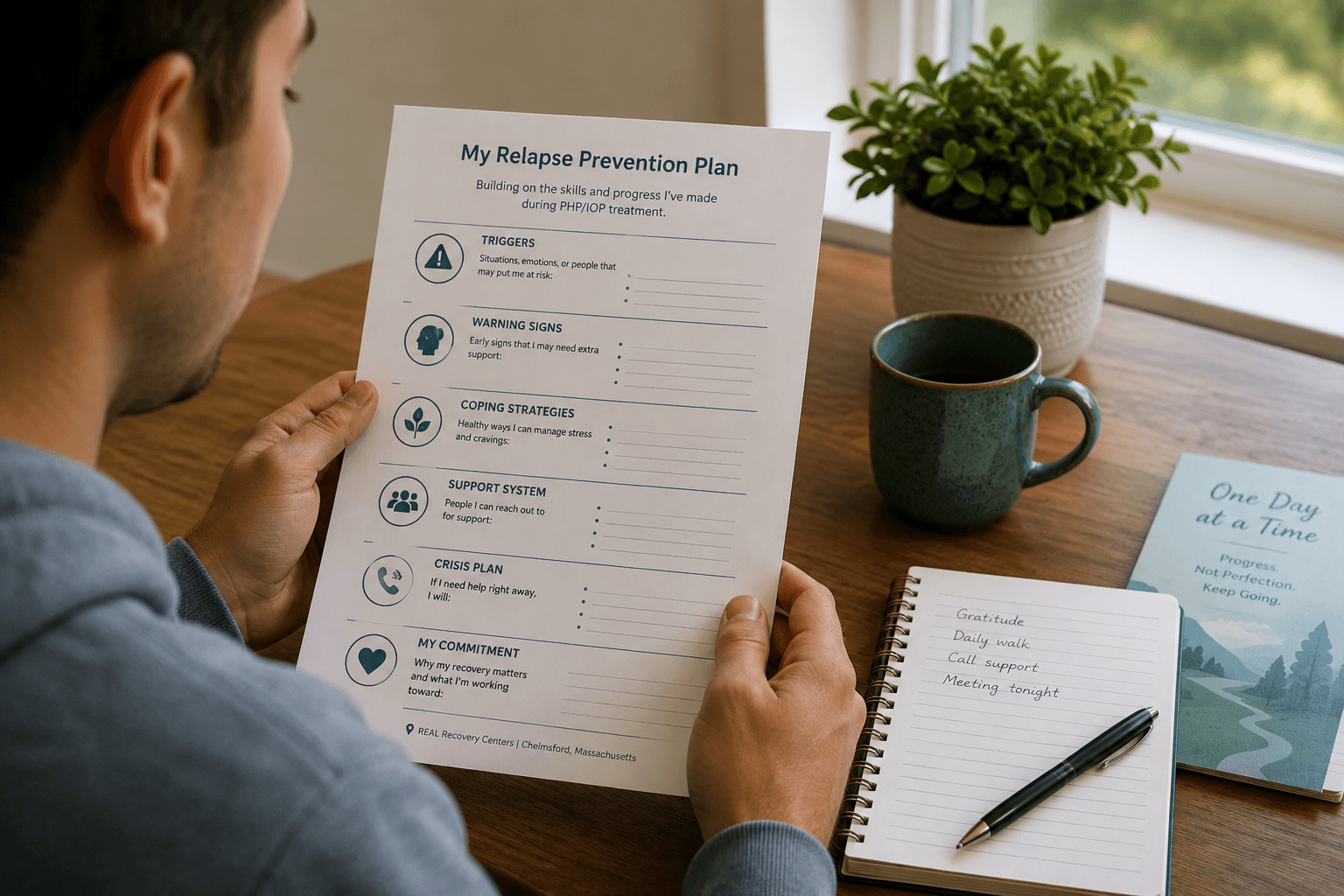
Relapse prevention becomes essential as you transition back to the high-stress environment that contributed to substance use initially. You learn to recognize warning signs early, implement coping strategies before situations become crises, and build support systems that sustain long-term recovery in challenging professional contexts. Our addiction aftercare programs are designed to stay with you long after the intensive phase of treatment ends, because sustained recovery matters as much to us as getting you through day one.
You’ve spent years building your career. Professional addiction treatment helps you keep what you’ve built while eliminating what’s destroying you. That’s not weakness. It’s the same problem-solving intelligence that made you successful professionally, now applied to the most important problem you face.
Recovery. Restored. Sustained.
Frequently Asked Questions
Can I go to treatment while still working full-time?
Yes. Real Recovery Centers’ day treatment, outpatient, and virtual treatment programs are structured so that working professionals can attend treatment without taking extended leave. Many clients in our programs continue working throughout their treatment.
Will my employer find out I’m in treatment?
Not through us. BSAS-licensed treatment is confidential and protected under both federal and Massachusetts state privacy law. You are not required to disclose your treatment to your employer. Our admissions team can walk you through your specific privacy options when you call.
Does insurance cover treatment for work-related substance use?
Most major insurance plans accepted in Massachusetts, including BCBS, Aetna, Cigna, and MassHealth, cover evidence-based addiction treatment. You can verify your insurance online in minutes at no cost or obligation.
What if I’ve tried treatment before and it didn’t work?
Previous attempts at recovery are common and don’t predict future outcomes. Our dual diagnosis treatment addresses both substance use and the underlying mental health conditions like anxiety, depression, or burnout that often drive relapse when left untreated. If prior treatment didn’t address what was actually fueling the behavior, this time can be different.
How do I know which level of care is right for me?
That’s exactly what our clinical assessment determines. When you call, our team evaluates your situation and recommends the most appropriate program, whether that’s PHP, day treatment, or outpatient services. You don’t have to figure that out on your own.
Ready to address work stress and substance use before career consequences become unavoidable? Contact Real Recovery Centers at (978) 788-1870 for confidential support, or complete our online insurance verification to understand your coverage options. Our BSAS-licensed programs in Chelmsford, Massachusetts, provide evidence-based treatment designed for professionals managing demanding careers while building sustainable recovery.
Written by the clinical team at Real Recovery Centers, a BSAS-licensed addiction treatment facility in Chelmsford, Massachusetts.
This article is part of Real Recovery Centers’ Mental Health Awareness Month 2026 series. For more information about professional addiction recovery, visit our resources on understanding dual diagnosis when depression and substance use occur together, trauma-informed treatment approaches, family healing during recovery, and building a sustainable long-term recovery plan.