
Many people in Massachusetts want practical tools to handle cravings, stress, and the situations that lead to substance use. Cognitive behavioral therapy for addiction Massachusetts focuses on the link between thoughts, feelings, and behaviors. With a structured plan and real-life practice, you can learn skills that make each day more manageable. Real Recovery Centers in Chelmsford offers CBT within outpatient programs, presented here as an educational guide to help you understand your options.
What Is CBT and How Does It Work?
CBT is a skills-based therapy that teaches you to notice unhelpful thoughts, test them against facts, and choose healthier actions. In addiction care, CBT helps you:
- Map triggers and early warning signs
- Challenge “automatic” thoughts that fuel cravings
- Practice coping strategies for high-risk moments
Common CBT Tools You’ll Learn
- Functional analysis: Break down a recent slip or craving episode to see patterns.
- Thought records and cognitive restructuring: Capture a thought, examine evidence, and replace it with a balanced alternative.
- Coping-skills training: Urge surfing, grounding, relaxation, and behavioral activation to reduce risk.
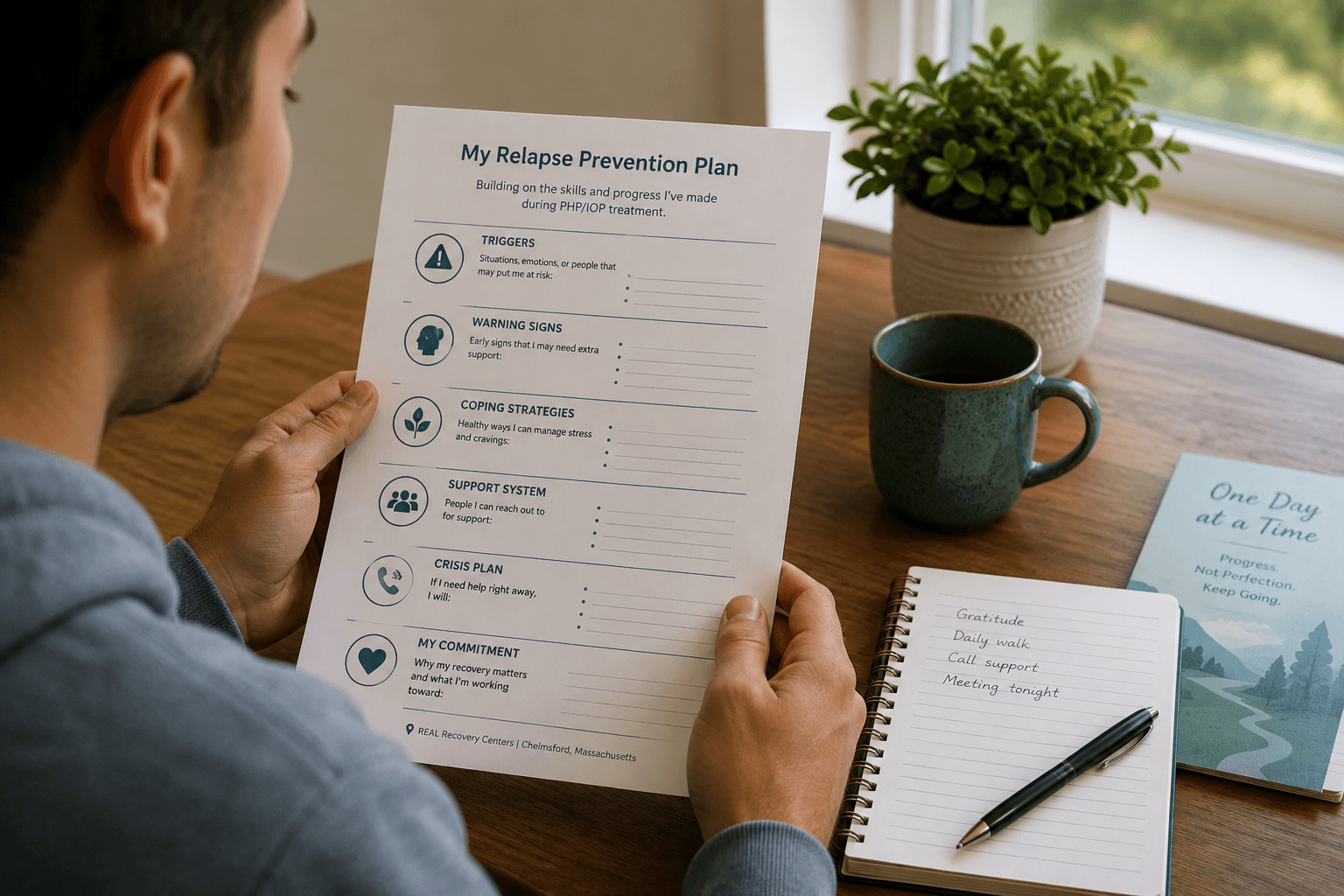
- Relapse-prevention planning: Identify high-risk situations and build practical responses ahead of time.

Why CBT Helps with Addiction
CBT builds day-to-day skills, so you’re not relying on willpower alone. Over time, people report fewer high-risk situations, better stress management, and clearer decisions. Many also notice improvements in sleep, mood, and routine because CBT encourages consistent, healthy behaviors.
Managing Triggers and Cravings
CBT treats cravings as temporary, manageable experiences. You’ll learn urge-surfing, distraction, and positive replacement activities. You’ll also practice planning for specific triggers such as conflict, fatigue, or social pressure.
Supporting Co-Occurring Conditions
Anxiety and depression can worsen cravings. CBT includes practical tools for worry, low mood, and avoidance. Treating both substance use and mental health symptoms at the same time can improve outcomes, especially in structured outpatient care.
Where Does CBT Fit: PHP vs IOP vs Standard Outpatient
CBT is flexible and can be delivered across outpatient levels of care:
- Partial Hospitalization Program (PHP): Most intensive outpatient setting with multiple hours of structured therapy most weekdays. Helpful if symptoms or relapse risk are higher and you need daily support.
- Intensive Outpatient Program (IOP): Several sessions per week, balancing therapy with work or school. Strong fit for skill-building and relapse prevention.
- Standard Outpatient (OP): Weekly or biweekly therapy and check-ins to maintain gains.
Real Recovery Centers is a BSAS-licensed outpatient provider in Chelmsford offering Partial Hospitalization (PHP) and Intensive Outpatient (IOP) programs. Insurance verification, including MassHealth, is supported so you can understand coverage before starting.
What is cognitive behavioral therapy for addiction in Massachusetts?
Cognitive behavioral therapy for addiction in Massachusetts is a structured, short-term therapy that teaches people to identify triggers, challenge unhelpful thoughts, and practice healthier coping skills. CBT is used across outpatient levels of care and can support relapse prevention and co-occurring conditions like anxiety or depression. It’s practical, measurable, and focused on daily progress.
CBT Techniques You May Use in Treatment
- Trigger mapping & high-risk planning: Create a simple action plan for people, places, and feelings that raise risk.
- Behavioral experiments: Test new coping strategies in real life and track results.
- Skills rehearsal: Role-play tough conversations and practice refusal skills.
- Lifestyle stabilization: Sleep, nutrition, and scheduling to reduce vulnerability to cravings.
- Relapse-prevention toolkit: Warning-sign checklist, emergency coping steps, and a support contact plan.
Explore how our CBT approach supports relapse prevention and long-term recovery. You can also learn more about our Outpatient Programs designed for flexibility and real-world application.

Combining CBT with Other Supports
CBT often works alongside group therapy, family education, peer support, and, when appropriate, medication-assisted treatment. Your team may coordinate care so therapy skills match your medication plan and daily schedule. If you’re exploring medication safety, this guide on understanding the risks of gabapentin and hydrocodone explains potential interactions. For questions about substance detection, review cocaine detection times and factors affecting elimination to understand what influences test results.
What to Expect in a CBT Session
A typical session has a short check-in, a clear agenda, skills practice, and a brief take-home plan. You’ll track progress with simple measures, refine strategies, and celebrate small wins. Discomfort can happen when discussing triggers; your therapist will pace sessions to keep things safe and manageable.
FAQs
How long does CBT take for addiction?
Many CBT plans run 8–16 weeks, with the option to continue in maintenance. Length can vary by goals, symptoms, and level of care.
Is CBT available virtually in Massachusetts?
Telehealth may be available in select programs. Availability can change; call to confirm current options and what your insurance allows.
Can CBT prevent relapse?
CBT can reduce relapse risk by teaching early-warning sign tracking, coping skills, and planning for high-risk situations. It’s not a guarantee, but it gives you practical tools for real life.
Does insurance cover CBT in Massachusetts?
Coverage varies by plan. Our team can verify benefits, including MassHealth, and help you understand what’s included before you begin.
How do I know if PHP, IOP, or outpatient is right for me?
If you need more structure and support, PHP may be a good start. If you need flexibility with work or school, IOP often fits. Outpatient helps you maintain progress with weekly sessions. A professional assessment can guide this decision.
When You’re Ready, Compassionate Help Is Here
Recovery doesn’t have to feel out of reach. Whether you’re exploring treatment for the first time or returning to care after a setback, support is available right here in Massachusetts.
If you or someone you love is ready to start healing, the Chelmsford team at Real Recovery Centers is here to listen and guide you through your next steps. Call today for a confidential conversation, insurance verification, or to learn more about how evidence-based therapies like CBT can help you rebuild balance and confidence in daily life.