
Five weeks without alcohol puts you past the most common relapse window and into territory where sobriety is beginning to feel less like something you are doing and more like something you are. The changes happening in your body and brain at this stage are less dramatic than week one and more durable than week two.
This post covers what is shifting physically and mentally at five weeks, what the sustained benefits look like, and how to protect the progress you have built so far.
If stopping has been harder than expected at any point in these five weeks, alcohol addiction treatment in Massachusetts is available without judgment and without putting your work or family life on hold.
What Happens to Your Body After 5 Weeks Without Alcohol
After 5 weeks without alcohol, the body’s recovery has moved from acute restoration into a more sustained phase of repair. Liver function continues to improve, cardiovascular markers remain on a positive trajectory, and many of the physical changes that were just beginning at week two are now well established.
The liver is continuing its recovery at five weeks, with fatty liver reversal progressing and enzyme levels stabilizing for most people without advanced pre-existing liver disease. For people who have had elevated liver enzymes in bloodwork, five weeks of abstinence typically produces results that are meaningfully different from pre-abstinence levels.
Gut health is one of the more underreported changes at this stage. Alcohol disrupts the gut microbiome significantly, and five weeks of abstinence gives the digestive system enough time to begin meaningful restoration, which shows up as improved digestion, reduced bloating, and more stable energy throughout the day.
Skin, hair, and nail quality continue to improve at five weeks. Collagen production, which alcohol suppresses, is recovering, and the visible changes in skin clarity and texture that began around week three are more pronounced now.
Physical exercise tolerance is notably higher at five weeks for most people. Better sleep, improved cardiovascular function, and the absence of the dehydration and inflammation that alcohol causes combine to make sustained physical activity feel considerably easier.
Mental and Emotional Changes at 5 Weeks
Five weeks is often where the psychological shifts begin to feel structural rather than temporary. The mood instability of post-acute withdrawal syndrome is less frequent and less intense for most people at this stage, and emotional regulation has improved considerably from the early weeks.
Cognitive clarity at five weeks is significantly better than during active drinking for most people. Working memory, focus, and the ability to manage stress without reaching for a substance are all measurably improved, and many people notice this most clearly in their work performance and their capacity for difficult conversations.
This stage can also surface a quieter kind of challenge: the realization that some anxiety, low mood, or discomfort was not created by alcohol and does not disappear with its removal. For some people, five weeks of sobriety reveals an underlying mood or anxiety condition that alcohol was partly masking.
If anxiety or depression feels persistent or is more visible rather than less at five weeks, co-occurring anxiety or depression is common and responds well to integrated clinical treatment that addresses both conditions at the same time.
Benefits That Are Becoming Habit
The benefits at five weeks are less about dramatic change and more about a new baseline. Energy levels are stable and higher than during active drinking, sleep is consistently restorative, and the cognitive fog that many drinkers stop noticing until it lifts has been absent long enough to feel normal.
Relationships continue to improve at this stage. People around you have had five weeks to experience the consistency and presence that sobriety produces, and those changes tend to compound quietly in ways that become more visible over time.
Financial savings are tangible at five weeks. Five weeks of removed alcohol spending is a number most people can calculate and feel, and for many it represents a meaningful shift in their monthly budget.
Many people at five weeks also notice improved physical fitness, not because they have necessarily changed their exercise habits, but because their body is performing better on the same effort. Hydration, sleep quality, and reduced inflammation all contribute to better physical output.
Protecting What You Have Built
Five weeks is a meaningful point to be intentional about what comes next. The urgency of the early weeks has faded, the dramatic physical changes have settled into a new normal, and it can be easy to underestimate how much active maintenance sustained sobriety requires.
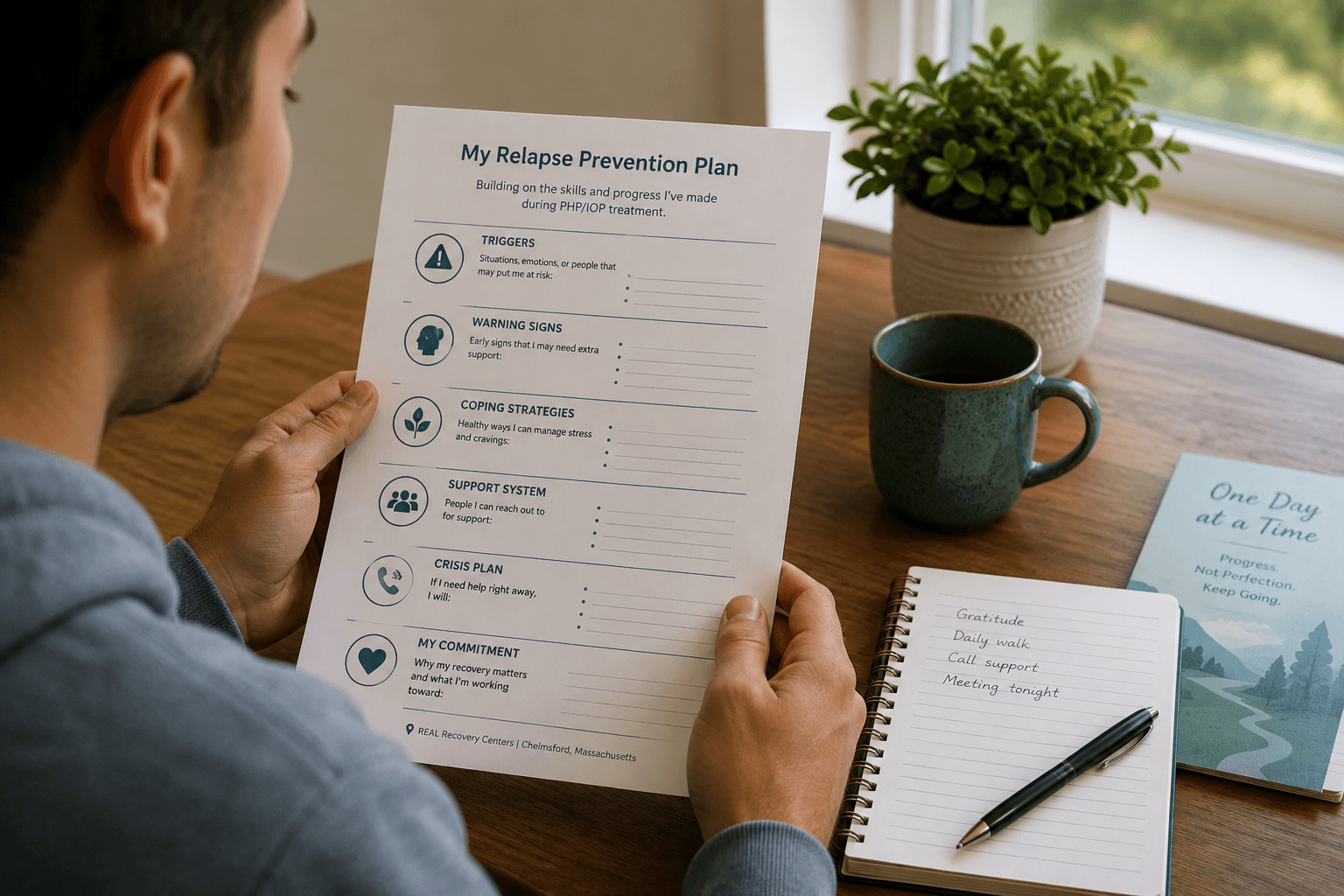
Relapse at this stage often happens not through a dramatic decision but through gradual exposure to high-risk situations without a plan. Identifying those situations in advance and having a specific response prepared is one of the most clinically supported strategies for maintaining sobriety beyond the first months.
A structured relapse prevention plan built with clinical support addresses triggers, coping strategies, and early warning signs before they become crises, which is considerably more effective than managing them in the moment.
For people who are finding cravings or stress responses difficult to manage at five weeks, medication-assisted treatment provides evidence-based tools that reduce craving intensity and support sustained sobriety over the longer term.
Real Recovery Centers is a BSAS-licensed outpatient addiction treatment program in Chelmsford, Massachusetts.
Our clinical team provides evidence-based care for alcohol use disorder, with flexible scheduling designed to work around work and family commitments. Most major Massachusetts insurance plans are accepted.
Verify your insurance coverage in minutes, or call 24/7: (978) 788-1870
Treatment Options in Massachusetts
Reaching five weeks independently is meaningful, and clinical support at this stage is not about starting over: it is about building the structure that makes the next five weeks, and the five after that, more sustainable.
An intensive outpatient program in Massachusetts provides structured clinical support three to four days per week, with individual therapy, group work, and relapse prevention planning built into the program around a normal work schedule.
Those who want more intensive daily support can access a partial hospitalization program, which provides five to six days per week of structured programming while allowing a return home each evening.
For those who prefer remote access or live outside commuting distance of Chelmsford, a virtual treatment program delivers the same clinical support through a telehealth format.
Frequently Asked Questions About 5 Weeks Without Alcohol
What happens to your body after 5 weeks of no alcohol?
After five weeks without alcohol, most people experience sustained improvements in liver function, gut health, skin quality, sleep, and cardiovascular health. The more dramatic early changes have settled into a new physical baseline, and many people notice improvements in exercise tolerance and energy consistency that reflect the compounding effects of sustained abstinence. Recovery continues beyond five weeks, but the foundation is meaningfully different from where it was at week one.
Does the liver fully recover after 5 weeks without alcohol?
Five weeks of abstinence produces significant and measurable improvements in liver enzyme levels and continues the reversal of fatty liver for most people without advanced pre-existing liver disease. Full liver recovery is not complete at five weeks: the timeline depends heavily on the severity and duration of prior drinking. Five weeks represents meaningful progress, and continued abstinence allows recovery to continue over months.
Is it normal to feel emotional or unsettled at 5 weeks sober?
Yes, emotional variability at five weeks is common and reflects the ongoing process of neurological recalibration. Post-acute withdrawal syndrome can produce intermittent mood disruption, anxiety, or irritability at this stage, though these symptoms are typically less intense and less frequent than in the early weeks. If mood or anxiety feels persistent rather than improving, it may point to a co-occurring condition that benefits from clinical support.
What should I do to stay sober past five weeks?
The most clinically supported approach to maintaining sobriety past five weeks involves proactive relapse prevention planning rather than reactive management of cravings as they arise. Identifying high-risk situations, developing specific coping responses, and maintaining connection to clinical or peer support significantly improve long-term outcomes. Structured outpatient programs provide the framework and accountability that make the transition from early sobriety to sustained recovery more achievable.
Five weeks without alcohol is more than a milestone: it is a foundation. The physical and psychological changes at this stage are real, and they compound with every additional week of sustained sobriety.
Whether you are continuing independently or considering clinical support, the progress you have made to this point is meaningful and worth protecting.
Ready to take the next step?
If you are in Massachusetts, the team at Real Recovery Centers is available 24 hours a day, 7 days a week. Call (978) 788-1870 or contact us here.
If you are outside Massachusetts, our virtual treatment program may be an option for you.
This post is part of the Real Recovery Centers alcohol-free series. Continue reading: four weeks no alcohol| six weeks no alcohol (next)