The Invisible Patients in Addiction Treatment
Walk into any addiction treatment center in Massachusetts, and you’ll meet the person seeking recovery. They’re filling out intake forms, attending group therapy, learning coping strategies.
But there are invisible patients in every treatment program. They’re the mother who hasn’t slept through the night in three years. The spouse who checks their partner’s eyes every morning looking for signs of relapse. The sister who stopped inviting her brother to family events because she couldn’t handle another scene.
These invisible patients are family members. They’ve been living in crisis mode so long they don’t remember what normal feels like. They’ve tried everything: tough love, gentle encouragement, ultimatums, pleas, threats, bargains.
Nothing worked until they understood this: addiction is a family disease. The person with the substance use disorder needs treatment. So does everyone around them.
Comprehensive family therapy programs in Massachusetts treat the whole system, not just the individual, because recovery that doesn’t include the family rarely lasts.
Why Addiction Reshapes Every Family Member
Family therapy strengthens addiction recovery by addressing dysfunctional communication patterns, codependency behaviors, and trauma that sustains substance use within family systems. Research shows supportive family relationships decrease risk of relapse, while families receiving their own therapeutic support see higher treatment retention rates in 2026 data.
The therapy helps both the person in recovery and family members heal from addiction’s impact on relationships.
The Recovery Research Institute reports that 74.8% of people who had significant substance use problems achieved recovery or recovered status (Recovery Research Institute, 2022). This isn’t just about the individual’s determination. Family support plays a documented role in these outcomes.
When addiction enters a family, everyone adapts. Not consciously. Not deliberately. But survival requires adaptation when you’re living with someone whose behavior has become unpredictable and whose relationship to substances has become more important than their relationship to you.
These adaptations create roles. The enabler protects the person from consequences. The hero compensates by being perfect in every other area. The scapegoat acts out to distract from the real problem. The lost child disappears to avoid adding stress. The mascot uses humor to diffuse tension.
These roles help families survive addiction. But they prevent families from healing from it.
Dual diagnosis treatment in Massachusetts addresses not just the person’s substance use and mental health, but also the family dynamics and mental health challenges that family members develop while living in crisis.
The financial toll is measurable. The emotional toll isn’t there. How do you quantify years of hypervigilance? The cost of waiting for the phone call that says they overdosed? The weight of wondering if you should have done more, or if you’ve already done too much.
What Family Therapy Actually Looks Like
Let’s clear up misconceptions first. Family therapy for addiction is not an intervention where everyone confronts the person about their drinking. It’s not a session where the therapist lectures your family about what you did wrong.
It’s not designed to make you feel guilty for their choices.
Here’s what actually happens. A licensed family therapist meets with your family to understand the specific patterns that have developed in your relationships. Not to assign blame.
To understand the system.
Then the real work begins. You learn how to communicate without the patterns that addiction created. Instead of walking on eggshells hoping to avoid a conflict that triggers using, you practice direct communication.
Instead of speaking for each other or about each other, you practice speaking to each other.
The therapist teaches you the difference between boundaries and walls. A boundary says “I won’t give you money because I know you’ll use it to buy alcohol.” A wall says “I’m cutting you out of my life entirely.”
Boundaries protect you while maintaining connection. Walls protect you by destroying connection.
You process trauma together. Not just the person’s trauma that might have contributed to their substance use. The family’s trauma from living with addiction.
The missed graduations, the emergency room visits, the lies, the broken promises, the times you thought you’d lost them.
PHP programs in Massachusetts integrate weekly family sessions into structured treatment, recognizing that the person in treatment is returning to a family system. If that system hasn’t changed, the patterns that sustained addiction remain in place.
Trust doesn’t rebuild in a single apology. It rebuilds through consistent behavior over time, and family therapy provides the framework for that rebuilding.
The therapist helps establish what trustworthy behavior looks like, how to acknowledge when it’s broken, and how to repair it without falling into old patterns of enabling or codependency.
The Five Patterns That Keep Addiction Alive
Research on family systems in addiction identifies patterns that appear across different families with striking consistency. Understanding these patterns is the first step to changing them.
Enabling looks like help. You call in sick to your job when you’re too hungover to work. You pay their rent when they spend the money on drugs.
You make excuses to other family members about why they can’t show up to events. Each time, you’re preventing them from experiencing the natural consequences of their choices. Each time, you’re teaching them that someone else will handle the fallout.
Codependency means your emotional state depends entirely on their state. When they’re sober, you’re happy. When they’re using, you’re devastated.
Your identity has become “the person trying to fix them.” You can’t remember who you were before addiction took over your family. Your needs don’t factor into your decisions anymore because their crisis is always more urgent.
Poor communication means the family has learned to avoid difficult topics. Nobody talks about the obvious. Everyone tiptoes around the person’s substance use, hoping if you don’t mention it, maybe it won’t get worse.
Or you explode in anger about something small because you’ve been holding back about the big things for so long. The family never learned how to have hard conversations that stay focused and respectful.
Enmeshment means nobody in the family has clear boundaries between self and others. Parents read their adult child’s mail. Spouses track each other’s location constantly.
Children feel responsible for parents’ emotions. Nobody’s allowed privacy because the family has decided privacy equals secrecy, and secrecy enabled the addiction. But the constant surveillance doesn’t create safety.
It creates resentment.
Triangulation means conflicts between two people pull in a third person. Mom and Dad can’t talk about their concerns directly, so they each talk to their daughter about the other. The person in recovery and their spouse are in conflict, so they both call the person’s sister to get her to take a side.
These triangles create alliances and fractures that make healthy communication impossible.
Dialectical behavior therapy in Massachusetts teaches emotional regulation skills that help families recognize and interrupt these patterns. When family members can identify their own emotional responses and manage them without acting out these dysfunctional patterns, the whole system begins to shift.
Intensive outpatient programs include family group sessions where families learn from each other. Hearing another family describe the enabling pattern helps you recognize it in yourself in ways that a therapist’s explanation might not.
Seeing another family successfully set boundaries gives you permission to try it in your own relationships.
Graduation Season as a Catalyst for Family Healing
It’s late May in Massachusetts. Boston University, Boston College, Northeastern, UMass, and dozens of other colleges are graduating tens of thousands of students.
High schools throughout the state are holding ceremonies. Families are gathering to celebrate these milestones.
These gatherings expose what’s been avoided. The aunt who drinks too much makes uncomfortable comments. The graduate’s substance use, hidden during the semester, becomes obvious during the celebration weekend.
The family member in recovery attends but feels isolated when everyone else is drinking. The tension that’s been simmering in the family boils over during what’s supposed to be a celebration.
But these moments also create opportunities. The crisis of a graduation weekend gone wrong often becomes the catalyst that brings families into treatment.
The recognition that major milestones can’t be celebrated in healthy ways becomes the motivation for change.
Real Recovery Centers sees an increase in family therapy inquiries in June. Families who spent the semester hoping things would get better realize during graduation celebrations that professional help is needed. The person who’s been using substances through college recognizes that the transition to postgraduate life requires support.
The family, exhausted from years of crisis, finally admits they can’t fix this alone.
Think of it as a family graduation from old patterns. The person with the substance use disorder graduates from active use to recovery. The family graduates from crisis mode to healing mode.
These parallel processes happen together in family therapy sessions that acknowledge both the damage done and the relationships worth rebuilding.
Virtual treatment options mean families scattered across Massachusetts for summer activities can still attend therapy sessions. The daughter doing an internship in Boston, the son working at Cape Cod for the summer, and the parents in Worcester can all join the same family session remotely.
Massachusetts alumni support programs include family components specifically because recovery doesn’t pause for summer travel, work schedules, or milestone events. The support system has to flex with life’s realities.

How Family Therapy Works at Real Recovery Centers
Family therapy at Real Recovery Centers starts before the person enters treatment. During the initial assessment, the intake team asks about family dynamics, communication patterns, and relationships.
Not to judge. To understand the context the person is coming from and will return to.
Once treatment begins, family involvement follows a structured progression. The first family session focuses on psychoeducation. The therapist explains addiction as a brain disease, not a moral failing.
Families learn what’s happening neurologically when someone uses substances. Understanding the science doesn’t excuse the behavior, but it does replace blame with comprehension.
Week two introduces communication skills. The therapist teaches and practices active listening, using “I” statements instead of “you” accusations and staying present in difficult conversations without shutting down or exploding.
These skills sound simple. They’re remarkably hard to implement when you’re discussing topics loaded with years of hurt.
By week three, the focus shifts to boundaries. What’s the difference between supporting recovery and enabling continued use? How do you show love while refusing to participate in behaviors that harm the person?
Families role-play scenarios: the person asks to borrow money, wants to move back home, misses a family event. The therapist helps the family practice responses that maintain both connection and boundaries.
Week four begins trauma processing. This is where family members talk about the specific incidents that damaged trust: the time they found them unconscious, the missed wedding, the money stolen, the lies discovered.
The person in treatment listens without defending or explaining. The goal isn’t to rehash the past. It’s to acknowledge what happened so healing can begin.
Real Recovery Centers is BSAS-licensed and integrates family therapy into our evidence-based programs, recognizing that recovery affects the whole family system. We accept most insurance plans, and family therapy sessions are often covered as part of treatment. Verify your insurance coverage here or call (978) 788-1870 to learn about our family programs.
The final sessions focus on the transition. What happens when the structured treatment ends? How does the family maintain the new communication patterns at home?
What are the warning signs of relapse everyone should watch for, and what’s the family’s response plan? These sessions create a roadmap for the months after treatment, when families are implementing what they’ve learned without the therapist present.
Understanding how medication-assisted treatment works is part of family education because families often have misconceptions about MAT. Learning that medications like naltrexone or buprenorphine are evidence-based tools, not “replacing one drug with another,” helps families support the person’s treatment plan.
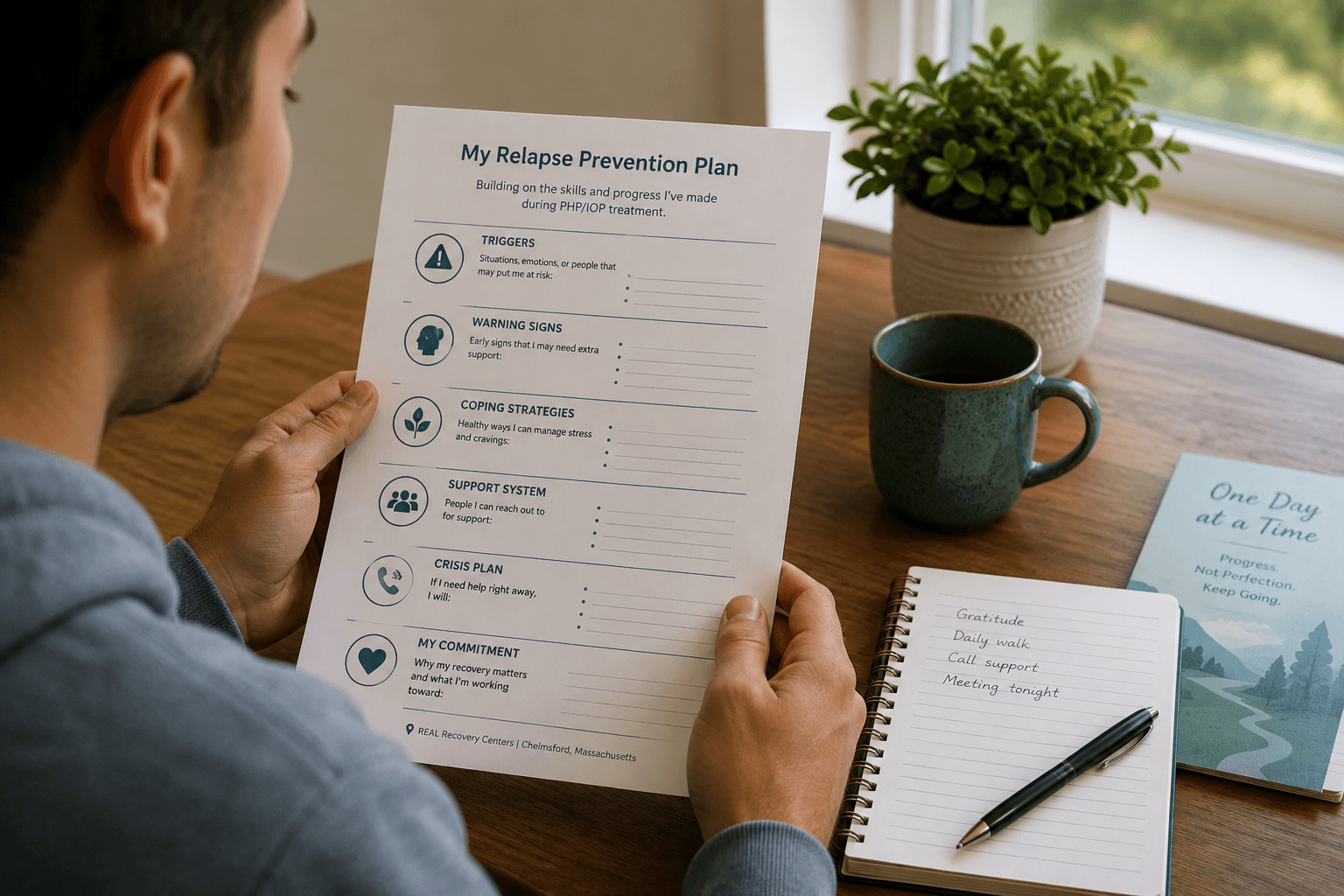
Evidence-based relapse prevention strategies include family components because the family’s response to early warning signs can mean the difference between a temporary lapse and a full relapse. Families learn what to do when they notice changes: not to panic, not to ignore it, but to reach out to the treatment team promptly.
What Healthy Family Recovery Actually Looks Like
You’ll know family therapy is working when difficult topics can be discussed without someone walking out or shutting down. When the person in recovery can say, “I’m struggling with cravings,” and the family’s response is supportive rather than punitive.
When family members can say “I’m still hurt by what happened” without it escalating into accusations.
Healthy family recovery means everyone is taking responsibility for their own healing. The person with the substance use disorder works their recovery program. Parents attend Al-Anon or similar support groups.
Spouses address their own codependency patterns in individual therapy. Nobody’s waiting for someone else to fix things.
Trust rebuilds through consistency. The person says they’ll be home at ten, and they’re home at ten. Repeatedly.
For months. The family member sets a boundary about lending money and maintains it. Repeatedly.
For months. Small agreements kept over time build a foundation stronger than grand promises broken.
Celebrations no longer center on alcohol. Graduation dinners, birthdays, and anniversaries happen at restaurants where nobody has to navigate a wine list.
Family gatherings include sober activities: hiking, game nights, and cooking together. The family discovers they can have fun without substances once they relearn how.
Boundaries are clear and respected. Adult children don’t have unlimited access to parents’ finances. Spouses respect each other’s privacy while maintaining transparency about recovery.
Parents don’t try to control their adult child’s choices but do control what happens in their own home.
The family can talk about the past without getting stuck there. What happened during active addiction gets acknowledged, processed, and then put in context.
It’s part of the family story, not the whole story. The focus shifts to who everyone is becoming, not just who everyone was.
Ongoing therapeutic support in Massachusetts helps families maintain the progress made in intensive family therapy. Monthly check-ins with a family therapist provide accountability and course correction when old patterns start creeping back.

Frequently Asked Questions About Family Therapy for Addiction
Does family therapy mean my family caused the addiction?
No. Family therapy examines how addiction has affected family relationships and communication patterns, not who’s to blame for it. The goal is understanding how to support recovery and heal from the damage addiction caused everyone.
What if my loved one doesn’t want family therapy?
Many treatment programs require family participation as part of admission. However, families can also do therapy without the person in treatment present. Working on your own patterns benefits you regardless of whether they participate.
Can families do therapy without the person in treatment?
Yes. Families often benefit from their own therapy sessions focused on codependency, enabling patterns, and boundary setting. You can change your role in the system even if the person isn’t yet ready to change theirs.
How long does family therapy for addiction take?
Initial intensive family therapy typically runs parallel to the person’s treatment program, lasting 6 to 12 weeks. Many families continue with monthly or quarterly sessions for a year or more as everyone adjusts to new patterns.
Will family therapy help if there’s been years of damage?
Healing from years of addiction-related trauma takes time, but family therapy provides structured support for that healing. Families report improved communication and reduced conflict even when complete trust takes longer to rebuild.
Your Family Can Heal from This
The damage is real. Years of lies, broken promises, financial stress, emergency calls, and constant hypervigilance changed your family.
Those changes don’t disappear the day someone enters treatment.
But healing is also real. Families who engage in structured family therapy report outcomes that individual treatment alone doesn’t achieve. The person in recovery has a stronger support system.
Family members rediscover their own identities outside of crisis management. Relationships rebuild on foundations of honesty rather than denial.
You can’t control whether the person you love chooses recovery. You can control whether you seek your own healing.
Family therapy isn’t just about supporting their recovery. It’s about your recovery from the trauma of loving someone with addiction.
The patterns that sustained addiction in your family can be identified, understood, and changed. The communication skills you’ve lost can be relearned.
The relationships you thought were permanently damaged can heal. Not quickly. Not without consistent effort.
But it’s possible.
Professional family therapy makes this possible by providing structure, expertise, and accountability that families can’t create on their own. You’ve been living in crisis mode long enough.
Comprehensive family therapy programs help your whole family move from surviving to healing.
For Massachusetts residents: Schedule a family consultation with our team in Chelmsford at (978) 788-1870 or visit our contact page to discuss how our family programs can support your family’s healing.
For those outside Massachusetts: Virtual family therapy may be available depending on your state. Contact us to learn about remote options for family support.
About Real Recovery Centers
Real Recovery Centers is a BSAS-licensed addiction treatment center in Chelmsford, Massachusetts, offering PHP, IOP, and outpatient programs for substance use and co-occurring disorders. Our evidence-based approach integrates family therapy into treatment, recognizing that recovery affects the entire family system. We accept most major insurance plans and provide 24/7 admissions support at (978) 788-1870.
Treatment Programs: Partial Hospitalization Program (PHP) | Intensive Outpatient Program (IOP) | Outpatient Services | Virtual Treatment | Dual Diagnosis | Medication-Assisted Treatment (MAT) | Family Therapy | Relapse Prevention
Serving: Greater Lowell, Chelmsford, Billerica, Tewksbury, Westford, Dracut, and surrounding Massachusetts communities.

Mitchell Grant Cohen
Dr. Mitchell G. Cohen is a board-certified Internal Medicine specialist with over 34 years of experience in patient-centered healthcare. A graduate of Hahnemann University School of Medicine, Dr. Cohen completed his internship at the University Health Center of Pittsburgh, where he gained invaluable hands-on experience. He is also a certified addiction specialist, holding membership with the American Society of Addiction Medicine (ASAM).
Currently based in Nashua, NH, Dr. Cohen is affiliated with Saint Joseph Hospital, where he provides comprehensive care focusing on both internal medicine and addiction treatment. His expertise includes prevention, diagnosis, and management of adult diseases, as well as specialized care for individuals facing substance use disorders.
Dr. Cohen is committed to fostering open communication, ensuring his patients are fully informed and empowered to make confident decisions about their health and treatment options.