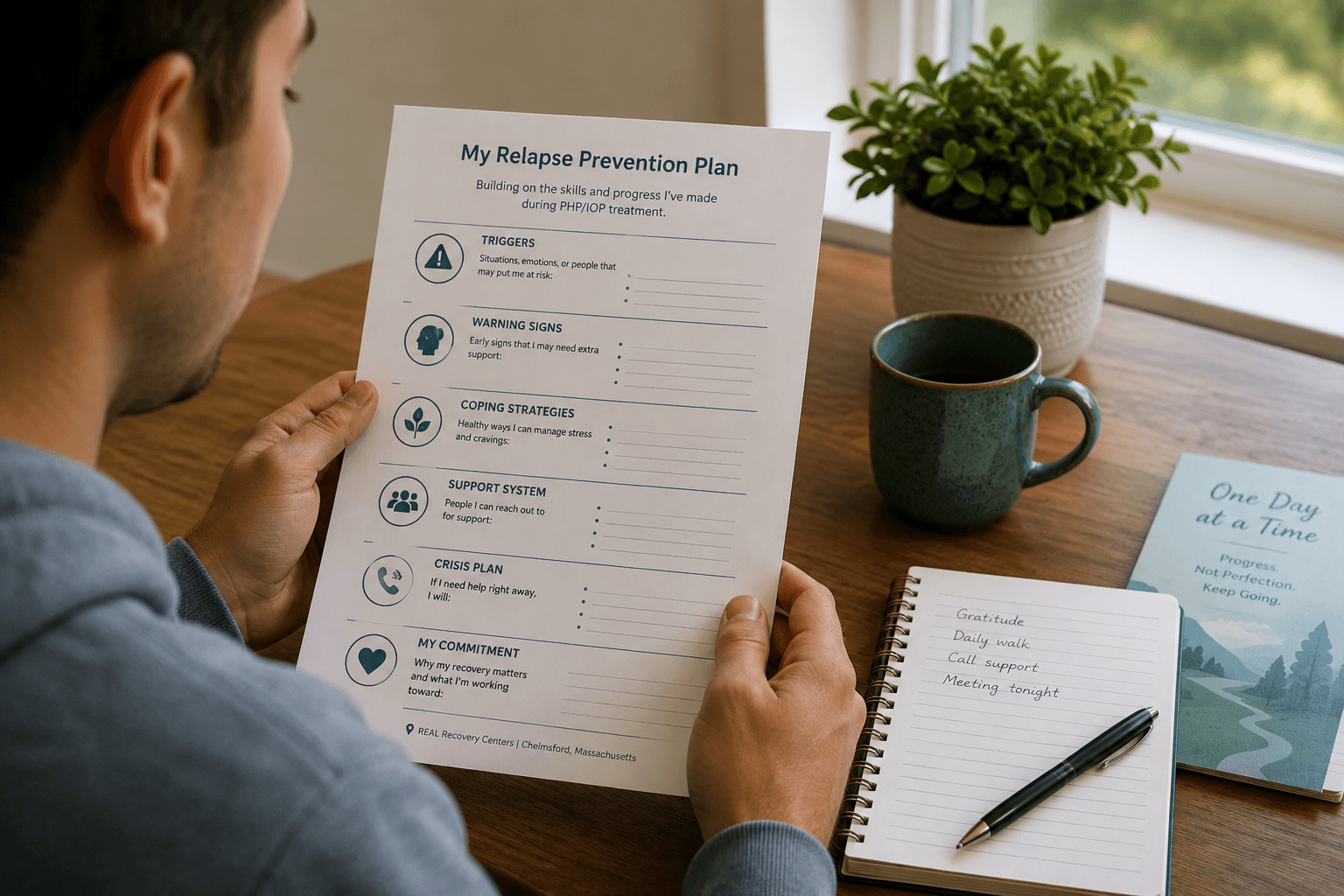
If you are dependent on Xanax, Klonopin, Ativan, or Valium, you already know that stopping is not as simple as deciding to stop. This post explains what is actually happening in your body, why benzodiazepine withdrawal requires medical support, and how benzodiazepine addiction treatment in Massachusetts at Real Recovery Centers can help you get there safely.
What Is Benzodiazepine Withdrawal and Why Does It Matter?
Benzodiazepine addiction treatment in Massachusetts involves a medically supervised tapering process to prevent dangerous withdrawal symptoms, followed by evidence-based outpatient therapy. Abrupt cessation of benzodiazepines can cause seizures, making professional supervision essential rather than optional. Once the taper is safely managed, outpatient programs such as PHP and IOP are appropriate for most people and can be structured around work and family life, though full recovery timelines vary based on medication, dose, and duration of use.
Benzodiazepines work by enhancing GABA, the brain’s primary calming chemical. With regular use, the brain adapts by reducing the sensitivity of its GABA receptors, meaning the same dose provides less and less of its original calming effect, and the nervous system comes to rely on the medication to feel balanced.
When someone stops taking a benzodiazepine suddenly, the brain swings in the opposite direction. The result is not just anxiety returning. It is a central nervous system rebound that can include tremors, elevated heart rate, high blood pressure, insomnia, and, in serious cases, life-threatening seizures.
This is why stopping benzos is medically different from stopping most other substances. It requires a supervised taper, not cold turkey. Understanding that is not a reason to feel worse about your situation. It is a reason to get the right kind of help.
The Benzodiazepine Withdrawal Timeline: What to Expect
Everyone’s experience is different, and the timeline varies depending on which benzodiazepine you take, how long you have used it, and the dose. Faster-acting benzodiazepines like Xanax tend to produce symptoms sooner. Longer-acting ones like Valium or Klonopin may take longer to begin.
Here is a general guide to what the withdrawal process can look like.
Days 1 to 4: Early Onset
Anxiety, irritability, and poor sleep are usually the first signs. Some people also experience sweating, rapid heartbeat, and difficulty concentrating. For those on faster-acting benzodiazepines, symptoms may start within 24 hours of the last dose.
Days 1 to 14: Peak Risk Window
This is typically the most difficult period. Symptoms can intensify and may include muscle tension, tremors, nausea, headaches, and heightened sensitivity to light and sound. The risk of seizure is highest during this window, though timing varies significantly based on the specific medication and individual history. Medical supervision is critical throughout this phase, not only at the start.
Weeks 2 to 12: Stabilization
Acute physical symptoms begin to ease for most people. Mood and sleep often remain disrupted longer than the physical symptoms. A structured taper managed by a clinical team significantly reduces the intensity of this period.
Weeks 12 and Beyond: Protracted Withdrawal
Some people experience what is called protracted withdrawal, a longer-lasting pattern of symptoms that can include intermittent anxiety, brain fog, and emotional sensitivity. This phase is real and recognized clinically, and its duration varies widely. It is not a sign of weakness, and it responds well to continued outpatient therapy and support.

Why You Need Medical Support and What That Actually Looks Like
You may have read that you can taper yourself at home. For some people with mild, short-term benzodiazepine use, that may be possible. For most people with established dependence, attempting it without clinical oversight carries serious risk.
A supervised taper means a medical team gradually reduces your dose at a pace your nervous system can tolerate. The goal is to minimize discomfort while protecting your safety. It is not about forcing you through the worst of it. It is about making the process manageable.
At Real Recovery Centers, our team works with you to coordinate a safe withdrawal plan before you transition into our outpatient programming. Our medication-assisted treatment approach is tailored to your specific medication, dose history, and health needs.
Once you are medically stable, you do not need residential treatment to recover. Many people do very well in a structured outpatient setting, particularly when the level of care is matched to their clinical needs.
What Treatment Looks Like After Stabilization
Getting through the taper is the beginning, not the end. The work of understanding why you relied on benzodiazepines, building better tools for anxiety and stress, and learning to trust your nervous system again happens in therapy.
Partial Hospitalization Program (PHP): PHP is five to six days per week, six to eight hours a day. It provides the kind of intensive daily support that is particularly valuable in the weeks immediately following stabilization, when your nervous system is still recalibrating and emotions can feel unpredictable.
Intensive Outpatient Program (IOP): IOP meets three to five days per week for three to four hours per session, with evening options available. It is designed to work around employment and family responsibilities, which matters a great deal for the adults we most often serve.
Both programs use evidence-based therapies, including cognitive behavioral therapy, dialectical behavior therapy, and trauma-informed approaches. These are structured clinical programs with individualized treatment plans, not generic group sessions.
Benzodiazepines and Anxiety: The Connection That Needs Addressing
For many people, benzodiazepine dependence developed because anxiety was real and undertreated. The medication helped. Then it stopped helping. Then it became something else entirely.
If that story sounds familiar, it matters that you know this: treating the addiction without also addressing the underlying anxiety is one of the most common reasons recovery does not hold. Real Recovery Centers offers dual diagnosis treatment that addresses both at the same time.
You are not broken because a medication designed to calm anxiety created dependence. That is a known pharmacological outcome. It is something to treat, not something to be ashamed of.
Ready to Take the First Step?
If you are currently taking benzodiazepines and know something needs to change, the most important thing you can do is talk to someone who understands the medical picture before you stop on your own.
Real Recovery Centers is a BSAS-licensed treatment program in Chelmsford, Massachusetts. We offer flexible PHP, IOP, and outpatient programs designed around your schedule. Medication-assisted treatment is available. We work with major insurance providers and will verify your coverage before your first appointment.
Verify your insurance now: realrecoverycenters.com/verify-insurance
Call our admissions line 24/7: (978) 788-1870
Do not stop your medication before speaking with a clinician. Do make the call. We will help you understand exactly what safe treatment looks like for your specific situation.

Frequently Asked Questions About Benzodiazepine Addiction Treatment in Massachusetts
How long does benzodiazepine withdrawal last?
Acute withdrawal symptoms typically peak within the first one to two weeks and ease over the following weeks for most people. Some people experience protracted withdrawal symptoms, including intermittent anxiety and sleep disruption, for several months or longer after stopping. A medically supervised taper significantly reduces the duration and intensity of both phases. The exact timeline depends on the specific medication, dose, and length of use.
Is it dangerous to stop benzodiazepines cold turkey?
Yes, for many people it can be. Abrupt cessation of benzodiazepines can trigger seizures, severe anxiety, and other serious medical complications, particularly for those with established physical dependence. Stopping gradually under medical supervision is the recommended approach. If you are currently taking benzodiazepines daily, speak with a clinician before making any changes to your dose.
Can benzodiazepine withdrawal be treated in an outpatient program?
Yes. Many people successfully complete benzodiazepine treatment through outpatient PHP and IOP programs, particularly after an initial stabilization period. Whether outpatient care is appropriate depends on the severity of dependence, overall health, and the stability of a person’s home environment. A clinical assessment will help identify the right level of care for your situation.
Does insurance cover benzodiazepine addiction treatment?
Most major insurance plans cover benzodiazepine addiction treatment under mental health and substance use disorder benefits. This includes BCBS, Aetna, Cigna, and MassHealth. The Mental Health Parity and Addiction Equity Act requires that insurers who do cover substance use disorder treatment provide those benefits on equal terms with other medical care. For most individual and small group plans, the Affordable Care Act also requires this coverage to be included. Real Recovery Centers can verify your specific benefits before your first appointment.
Is benzodiazepine dependence the same as addiction?
These are related but distinct terms. Physical dependence means your body has adapted to the presence of a substance and will have withdrawal symptoms without it. Addiction involves compulsive use despite harm. Many people who develop benzodiazepine dependence started taking the medication as prescribed and never intended to become dependent. Both situations benefit from professional support, and neither is a moral failing.
This Is Treatable. You Do Not Have to Figure It Out Alone.
Benzodiazepine dependence is one of the most pharmacologically complex situations in addiction medicine. It also responds very well to the right clinical approach.
People recover from benzodiazepine use disorder. They return to managing anxiety without medication, rebuild sleep, and reclaim the clarity that dependence took from them. That is not a guarantee for any individual outcome. It is what the clinical evidence and real recovery stories tell us is possible.
Real Recovery Centers is here when you are ready to talk.
If you are in Massachusetts: Call (978) 788-1870 or visit realrecoverycenters.com/contact to speak with our admissions team in Chelmsford.
If you are outside Massachusetts: Virtual treatment may be an option depending on your location. Reach out and we will let you know what is available.
Medically reviewed by the clinical team at Real Recovery Centers. Real Recovery Centers, 67 Parkhurst Ave, Chelmsford, MA 01824. BSAS-licensed outpatient addiction treatment. (978) 788-1870.

Mitchell Grant Cohen
Dr. Mitchell G. Cohen is a board-certified Internal Medicine specialist with over 34 years of experience in patient-centered healthcare. A graduate of Hahnemann University School of Medicine, Dr. Cohen completed his internship at the University Health Center of Pittsburgh, where he gained invaluable hands-on experience. He is also a certified addiction specialist, holding membership with the American Society of Addiction Medicine (ASAM).
Currently based in Nashua, NH, Dr. Cohen is affiliated with Saint Joseph Hospital, where he provides comprehensive care focusing on both internal medicine and addiction treatment. His expertise includes prevention, diagnosis, and management of adult diseases, as well as specialized care for individuals facing substance use disorders.
Dr. Cohen is committed to fostering open communication, ensuring his patients are fully informed and empowered to make confident decisions about their health and treatment options.