
At a Glance
- Anxiety disorders and substance use disorders frequently occur together and actively worsen each other over time
- Substances temporarily relieve anxiety symptoms but trigger brain chemistry changes that raise baseline anxiety long-term
- Treating only one condition leads to significantly higher relapse rates
- Integrated dual diagnosis treatment addresses both conditions simultaneously with one coordinated care team
- Real Recovery Centers is BSAS-licensed in Massachusetts and offers PHP, IOP, Outpatient, and Virtual treatment for co-occurring disorders
- Most major insurance plans are accepted, including MassHealth, BCBS, Aetna, and Cigna
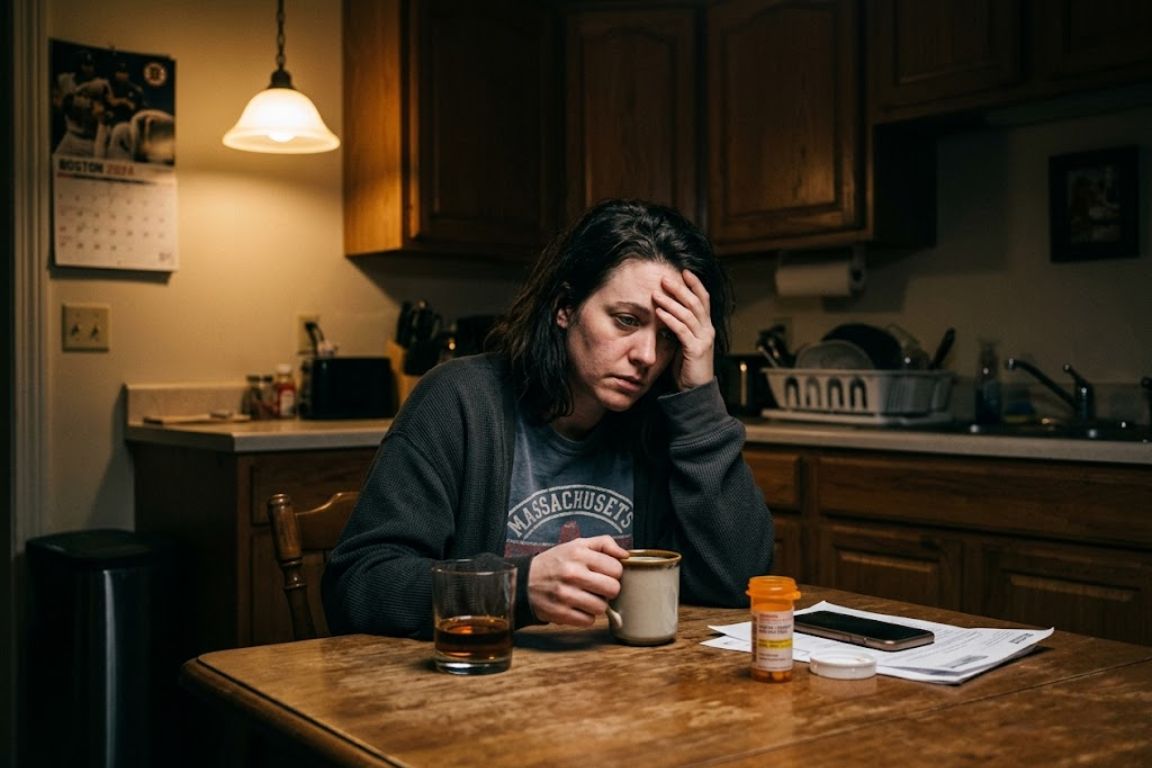
When your heart races uncontrollably at 3 AM, and the only thing that quiets the panic is a drink or a pill, you’re experiencing what clinicians call self-medication. It feels logical in the moment. The substance works. The anxiety fades, at least temporarily. But here’s what most people don’t realize until they’re deep into both problems: while substances temporarily soothe anxiety symptoms, they’re actually teaching your brain to need more of both the relief and the substance itself.
Mental Health Awareness Month each May is a reminder that Massachusetts residents dealing with both anxiety and substance use deserve to understand the connection most treatment providers miss. Anxiety disorders and substance use disorders don’t just happen to occur together. They feed each other in a self-reinforcing cycle that makes both conditions worse over time.
Research published in the Journal of Substance Use and Addiction Treatment found that people with anxiety disorders are significantly more likely to develop substance use disorders, and those with substance use disorders face elevated risk for developing anxiety disorders. This isn’t a coincidence. It’s neurobiology, learned behavior, and a cycle that requires specialized treatment to break.
Why Anxiety Drives People to Substances
Anxiety doesn’t feel like worry that you can just push aside. For people with generalized anxiety disorder, panic disorder, or social anxiety disorder, the physical symptoms feel overwhelming. Your heart pounds. Your chest tightens. You can’t catch your breath. Thoughts race in circles you can’t control. Sleep becomes impossible.
When someone discovers that alcohol calms the racing thoughts, or that benzodiazepines stop the panic, or that marijuana takes the edge off social situations, they’ve stumbled onto something powerful. The substance works faster than any coping strategy a therapist taught them. It’s more reliable than deep breathing exercises. In that moment of relief, a pattern begins.
The self-medication hypothesis, first described by Dr. Edward Khantzian in 1985, explains this progression. People don’t use substances to feel good. They use substances to feel normal. To quiet the internal chaos. To function at work without panic attacks. To sleep through the night without catastrophic thoughts. The substance becomes medicine for symptoms nobody else can see.
In Massachusetts, young adults aged 18 to 25 report binge drinking rates of 45.9% compared to the national average of 35.4% (Massachusetts Health Survey, 2023). College culture normalizes heavy drinking. Work environments in Boston’s competitive industries create constant stress. The substances are available, socially acceptable, and effective in the short term.
How Substances Make Anxiety Worse Over Time
Here’s where the cycle becomes self-reinforcing. While alcohol, benzodiazepines, or other depressants temporarily reduce anxiety symptoms, chronic use actually changes your brain chemistry in ways that increase baseline anxiety.
When you drink regularly to manage anxiety, your brain adjusts. It reduces production of GABA, your brain’s natural calming neurotransmitter, because the alcohol is artificially providing that effect. But when the alcohol wears off, you’re left with less natural anxiety regulation than you had before. Your baseline anxiety climbs higher.
Withdrawal from substances compounds this problem. Even mild withdrawal from alcohol produces anxiety symptoms: racing heart, trembling hands, difficulty concentrating, and irritability. For someone who started drinking to manage anxiety, these withdrawal symptoms feel exactly like the original problem getting worse. So they drink again to find relief, not realizing they’re now treating withdrawal anxiety on top of their original anxiety disorder.
Research published in the journal Addictive Behaviors demonstrates that substance use disrupts sleep architecture, increases stress hormone production, and impairs the brain regions responsible for emotional regulation. What began as self-medication becomes the primary source of the anxiety you’re trying to escape.
As one person in recovery described their experience: “I started drinking to calm down after stressful work days.” Then I needed it to fall asleep. Now I wake up anxious every morning until I can have a drink. I don’t know if I even had anxiety before or if the drinking created it. “That progression, from coping tool to chemical dependency, is something clinicians who specialize in dual diagnosis treatment hear constantly.
Why Treating Just One Condition Fails
Traditional treatment often separates mental health from addiction. The mental health clinic says, “Get sober first, then we’ll treat your anxiety.” The substance use program says, “We treat addiction, not anxiety disorders.” This separation leaves people bouncing between systems that can’t adequately help either condition.
A 2022 study published in the Journal of Affective Disorders found that treating anxiety without addressing co-occurring substance use resulted in significantly higher relapse rates. Similarly, addiction treatment that ignores underlying anxiety disorders shows poor outcomes, with patients returning to substances as their primary coping mechanism for untreated mental health symptoms.
The Bureau of Substance Addiction Services (BSAS) in Massachusetts recognizes this problem. Current data shows that approximately 70% of people in community substance use treatment report mental health needs, yet only about 30% of Massachusetts treatment facilities offer integrated mental health and addiction services.
This treatment gap is dangerous. When you’re dealing with both anxiety and substance use, treating one without addressing the other is like trying to bail water from a boat while ignoring the hole in the hull. The problems are interconnected. The solutions must be too.
Family members often recognize this cycle first. A parent watching their adult child cycle through anxiety episodes and substance use, a spouse noticing that stress at work is always followed by heavier drinking, a sibling who can see the pattern even when the person in the middle of it can’t. Family therapy is an important part of integrated treatment for this reason. Recovery affects the whole family, and the whole family benefits from being involved in the process.

What Integrated Dual Diagnosis Treatment Looks Like
Integrated treatment for co-occurring anxiety and substance use disorders means addressing both conditions simultaneously, with the same treatment team, at the same location. This approach recognizes that your anxiety didn’t exist in isolation from your substance use, and recovery can’t treat them as separate problems.
Evidence-based integrated treatment combines several therapeutic approaches:
Cognitive Behavioral Therapy (CBT) helps identify the thought patterns that fuel both anxiety and substance use. You learn to recognize catastrophic thinking that triggers panic, and you develop healthier responses to anxiety besides reaching for a substance. A 2024 systematic review published in the International Journal of Mental Health Nursing found that CBT-based interventions provided measurable improvement in both mental health and substance use symptoms when delivered in integrated format.
Dialectical Behavior Therapy (DBT) teaches specific skills for managing distress without substances. When anxiety symptoms spike, DBT provides concrete techniques including grounding exercises, distress tolerance strategies, and emotion regulation skills. Research shows DBT is particularly effective for people who experience intense emotions alongside substance use.
Medication-Assisted Treatment (MAT) may include appropriate anxiety medication alongside medication for substance use disorders. Working with a psychiatrist experienced in dual diagnosis ensures medications address both conditions without creating new problems. Someone with alcohol use disorder and generalized anxiety disorder, for example, might benefit from naltrexone for alcohol cravings combined with an SSRI for anxiety, rather than benzodiazepines that carry their own addiction risk.
Programs like Real Recovery Centers’ Intensive Outpatient Program provide the structure and intensity needed for dual diagnosis treatment while allowing you to maintain work and family responsibilities. The flexible scheduling means anxiety symptoms don’t become a barrier to treatment, and substance use doesn’t keep you from getting mental health care.
How Real Recovery Centers Addresses Both Conditions
Real Recovery Centers is BSAS-licensed, CARF-accredited, and specializes in integrated care for Massachusetts residents dealing with co-occurring anxiety and substance use disorders. The treatment approach recognizes that your conditions developed together and must be treated together.
From the first assessment, clinicians evaluate both mental health and substance use comprehensively. You’re not shuttled between separate programs or told to fix one problem before addressing the other. The treatment team includes addiction specialists and mental health professionals who collaborate on your individualized plan.
Group therapy sessions focus on shared experiences, helping you recognize you’re not alone in dealing with both conditions. Other participants understand what it’s like when anxiety triggers cravings or when early sobriety amplifies anxiety symptoms. This peer support becomes crucial for long-term recovery.
Individual therapy sessions dig deeper into your specific patterns. Maybe your social anxiety leads to pre-gaming before every social event. Perhaps work stress triggers panic attacks that you’ve learned to quiet with alcohol. Your therapist helps you understand these connections and build healthier coping strategies specifically for your situation.
The program also incorporates holistic addiction treatment approaches that support both conditions. Exercise reduces anxiety naturally while building healthy routines in recovery. Mindfulness practices strengthen your ability to sit with uncomfortable feelings without reaching for substances. Nutritional support addresses the physical damage that both anxiety and substance use create over time.
For Massachusetts residents in the Greater Lowell area, including Chelmsford, Billerica, Tewksbury, and surrounding communities, Real Recovery Centers provides evidence-based treatment without requiring residential admission. The Partial Hospitalization Program (PHP) offers intensive support during the day while you return home each evening. The Outpatient Program provides ongoing care as you transition back to full independence.
Breaking the Cycle: What Recovery Looks Like
Recovery from co-occurring anxiety and substance use disorders doesn’t mean your anxiety magically disappears the moment you stop drinking or using. In fact, anxiety often gets worse before it gets better, as your brain chemistry rebalances and you face emotions you’ve been numbing for months or years.
This temporary increase in anxiety during early recovery is why integrated treatment is so critical. Without proper support, this is exactly when people return to substances. They interpret increased anxiety as evidence that sobriety isn’t working, not recognizing it’s a normal part of the healing process.
With integrated treatment, you have support through this difficult transition. Your treatment team anticipates increased anxiety in early recovery and has specific strategies ready. You learn that anxiety, while uncomfortable, isn’t dangerous. You practice skills for managing panic attacks without substances. You discover that anxiety actually diminishes over time when you’re not constantly flooding your system with substances that disrupt your brain chemistry.
As weeks turn into months, something shifts. The anxiety that once felt constant starts to have breaks. You have hours, then days, where you feel relatively calm without needing a drink or a pill. Your sleep improves. Your relationships strengthen. You start recognizing anxiety symptoms early and using healthy coping strategies before the feelings become overwhelming.
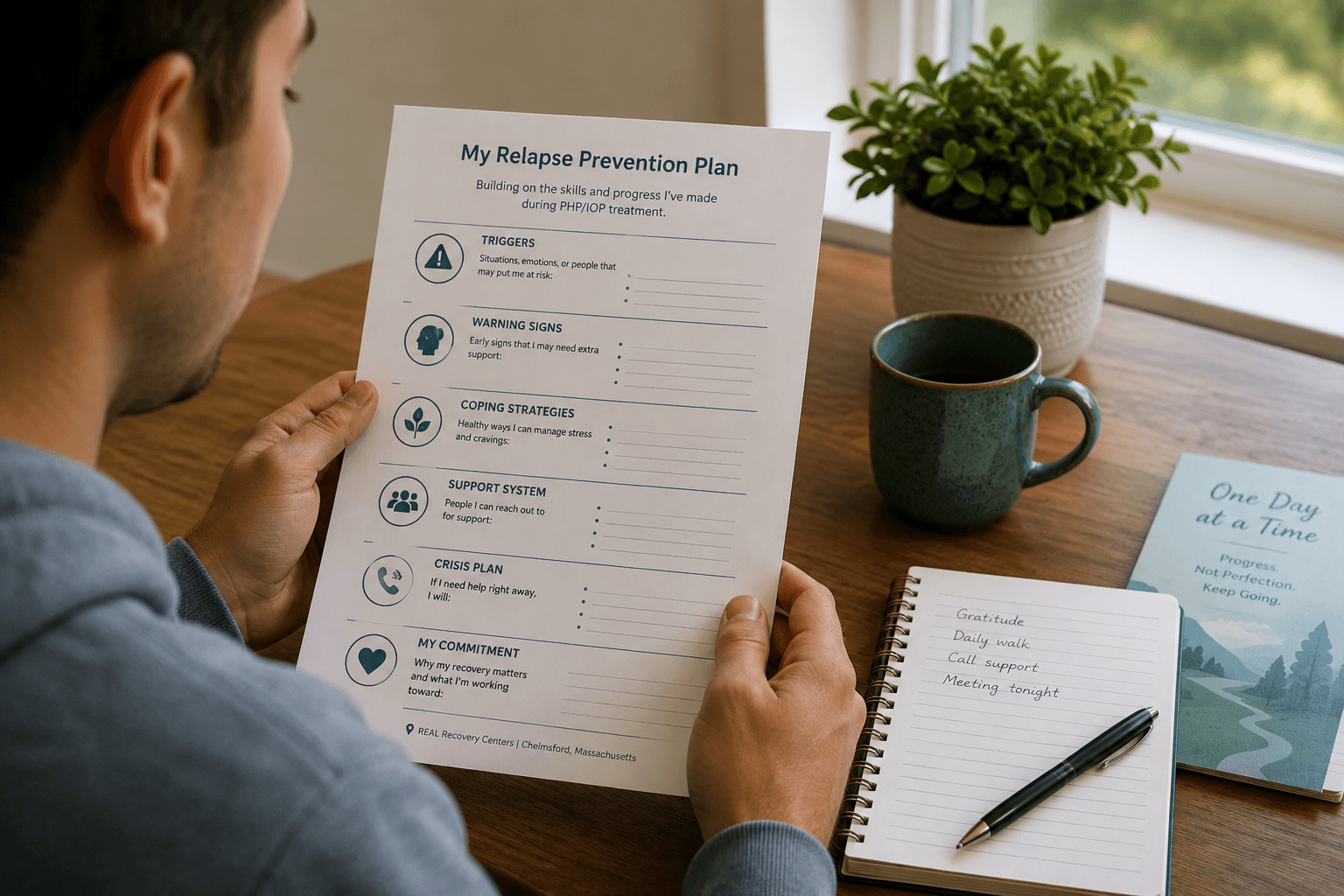
Relapse prevention becomes an ongoing focus, helping you identify triggers specific to both your anxiety and substance use patterns. You learn to distinguish between withdrawal-related anxiety, situational anxiety, and your underlying anxiety disorder, responding to each with the right tools rather than automatically reaching for substances.
Recovery isn’t about achieving a perfect state where you never feel anxious. It’s about building a life where anxiety doesn’t control you, and substances aren’t your only solution when difficult emotions arise.

Getting Started with Treatment in Massachusetts
If you’re reading this because substances have become your primary way of managing anxiety, you’re not alone, and you don’t have to choose between treating your mental health and addressing your substance use. Integrated treatment exists specifically for people dealing with both conditions.
Seeking help for co-occurring disorders isn’t weakness. It’s recognizing that the self-medication strategy that once seemed to work has stopped working. It’s understanding that professional treatment can break cycles you can’t break alone.
Real Recovery Centers provides free insurance verification to help Massachusetts residents understand their coverage for dual diagnosis treatment. Most major insurance plans cover integrated treatment programs, including MassHealth, BCBS, Aetna, and Cigna. Our 24/7 admissions line means you can take action whenever you’re ready, not just during business hours.
The connection between anxiety and substance use disorder isn’t your fault. The cycle feeds itself through brain chemistry changes, learned patterns, and the genuine relief substances provide in the short term. But with the right treatment approach, one that addresses both conditions at the same time, that cycle can be broken.
You don’t have to wake up anxious every morning. You don’t have to rely on substances to function. Integrated treatment offers a path forward where both your mental health and your recovery receive the specialized attention they deserve.
Frequently Asked Questions About Anxiety and Addiction in Massachusetts
Can anxiety cause substance use disorder?
Anxiety doesn’t directly cause substance use disorder, but it significantly raises the risk. When anxiety symptoms are severe and untreated, people often discover that substances provide faster relief than available coping strategies. Over time, that pattern of relief-seeking can develop into a substance use disorder. The relationship runs both ways: substance use also worsens anxiety, which is why integrated treatment for both conditions at the same time produces better outcomes than treating them separately.
Does anxiety get worse when you stop using substances?
For many people, yes, at least temporarily. When your brain has been relying on alcohol or other substances to manage anxiety symptoms, removing that substance triggers a rebound effect. GABA levels drop, stress hormones spike, and anxiety symptoms often intensify during early recovery. This is a normal and expected part of the healing process, not a sign that recovery isn’t working. Integrated dual diagnosis treatment anticipates this and provides specific clinical support to help you through it safely.
What is dual diagnosis treatment?
Dual diagnosis treatment is an integrated clinical approach that addresses a substance use disorder and a co-occurring mental health condition, such as an anxiety disorder, at the same time, with the same care team. Rather than treating addiction first and mental health second (or vice versa), dual diagnosis programs recognize that the two conditions are connected and must be treated together. Real Recovery Centers’ dual diagnosis program in Massachusetts offers this integrated approach through PHP, IOP, and Outpatient levels of care.
How do I know if I need dual diagnosis treatment vs. standard addiction treatment?
If anxiety, depression, trauma, or other mental health symptoms have played a role in your substance use, or if those symptoms persist or worsen during periods of sobriety, dual diagnosis treatment is likely the more appropriate level of care. A comprehensive clinical assessment at admission will identify co-occurring conditions and help determine the right treatment plan. You don’t need a prior diagnosis to be evaluated.
Does insurance cover dual diagnosis treatment in Massachusetts?
Most major insurance plans, including MassHealth, Blue Cross Blue Shield, Aetna, and Cigna, cover integrated dual diagnosis treatment. Coverage varies by plan, which is why Real Recovery Centers offers free insurance verification before admission. Call (978) 788-1870 or use our online insurance verification tool to confirm your benefits with no obligation.
Ready to address both anxiety and substance use together? Contact Real Recovery Centers at (978) 788-1870 for confidential support, or complete our online insurance verification to understand your coverage options. Our BSAS-licensed, CARF-accredited programs in Massachusetts provide evidence-based integrated treatment for co-occurring disorders, helping you build lasting recovery that addresses the whole person.
This article is part of Real Recovery Centers’ Mental Health Awareness Month 2026 series. For more information about dual diagnosis treatment, visit our resources on understanding co-occurring depression and substance use, trauma-informed addiction treatment, family therapy in recovery, and building a sustainable recovery plan.