
Ten weeks without alcohol is roughly two and a half months. It is long enough to see real, lasting change in how your body functions and how your mind works.
This is the third milestone in a series that follows the alcohol-free journey from the beginning. If you are just starting, read one week no alcohol first. If you are building on early progress, two weeks no alcohol covers the first major physiological turning point. This article is for everyone who wants to understand what sustained sobriety actually produces in the body, the brain, and in relationships.
What Is Happening in Your Body at Ten Weeks
Your liver has had more than two months to recover. For most people without advanced liver disease, many markers of liver function have returned to a much healthier range by this point.
Fatty liver, one of the most common and reversible effects of regular drinking, is typically well into its reversal at ten weeks. Liver enzyme levels that were elevated during active drinking have generally normalized for most people who were not dealing with severe liver damage before stopping.
Blood pressure, hydration, and sleep architecture have all stabilized significantly. The cardiovascular improvements that began around week two have continued to compound, reducing strain on the heart and circulatory system.
Your immune system is functioning better at ten weeks. Chronic alcohol use suppresses immune response, and ten weeks of sobriety gives your body substantial time to restore normal function, including the immune processes involved in fighting infection and reducing systemic inflammation.
Long-Term Physical Benefits Taking Shape
Body composition changes are often noticeable by week ten. Alcohol is calorie-dense, disrupts fat metabolism, and affects sleep in ways that compound weight gain over time. Without it, weight and energy levels often shift in ways that become clearly visible and felt.
Cardiovascular health is one of the most significant long-term benefits of sustained sobriety. The reduction in blood pressure that begins in early sobriety continues to compound, lowering the risk of heart disease, stroke, and related conditions over time.
Cancer risk is another area that is not often discussed in the context of early sobriety but matters in the long term. Alcohol is a known carcinogen linked to several cancer types, and the body’s ability to repair alcohol-related cellular damage improves with sustained abstinence. Research through the CDC’s alcohol and health resources documents the consistent connection between alcohol reduction and improved long-term health outcomes across multiple organ systems.
What Is Happening in Your Brain at Ten Weeks
The most significant change at ten weeks is neurological. Alcohol alters the brain’s dopamine and GABA systems over time, suppressing natural reward signaling and increasing dependence on alcohol to feel normal.
By week ten, many of those systems are meaningfully further along in recovery. The brain is producing and regulating dopamine more normally, which is why many people report a renewed sense of motivation, pleasure in everyday activities, and general emotional stability that felt absent during active drinking.
Emotional regulation is more stable at ten weeks than at any earlier point in recovery. Anxiety levels often drop significantly for people who were using alcohol as a way to manage stress, as the brain’s natural anxiety response recalibrates without the interference of alcohol.
Cognitive function continues to improve well into the ten-week range. Memory, focus, processing speed, and decision-making quality all benefit from extended sobriety in ways that show up in daily life, at work, and in relationships.
Brain Neuroplasticity and What It Means for You
The brain’s capacity for neuroplasticity, its ability to reorganize and repair itself, is one of the most important concepts in addiction recovery. Alcohol causes measurable changes in brain structure and function with prolonged use, but the brain actively works to reverse many of those changes when alcohol is removed.
At ten weeks, neuroplasticity is actively working in your favor. New neural pathways are being strengthened, old alcohol-associated reward circuits are weakening, and the brain regions involved in impulse control and emotional regulation are recovering function.
This process does not happen on a fixed timeline and it continues beyond ten weeks. But ten weeks represents a point where the benefits of neurological recovery are becoming genuinely functional rather than just theoretical.
The Relationships Around You
Ten weeks is long enough that the people closest to you have noticed something different. Sobriety changes how you show up in conversations, in parenting, in work interactions, and in conflict.
Trust takes longer to rebuild than sobriety takes to establish. Relationships that were strained or damaged during active drinking do not automatically reset at ten weeks, and it is important to hold realistic expectations about the pace of that repair.
Some relationships have already improved in tangible ways. Others may still carry damage that needs deliberate attention. Both realities are normal, and both are worth addressing through the kind of structured support that includes family therapy and communication skills building.
The Complacency Risk at Ten Weeks
Complacency is one of the most consistent risks at the ten-week mark. Things feel better, the crisis of early withdrawal is a distant memory, and it can feel like you have handled the hard part and no longer need the same level of support.
That thinking is understandable. It is also worth examining carefully. The research on alcohol use disorder consistently shows that long-term recovery is supported by ongoing structure, not ended once early milestones are met.
Triggers that felt manageable in earlier sobriety can return with more force at ten weeks, particularly in response to stress, loss, relationship tension, or life transitions. The difference is that at ten weeks, those triggers may feel less urgent than they did at day three, which can make them easier to underestimate.
When Ten Weeks Is a Beginning, Not a Destination
For some people, ten weeks without alcohol is a personal challenge successfully completed. For others, it is the beginning of a way of life that needs sustained structure to remain stable.
Knowing which category you are in matters. If reaching and staying at ten weeks required real effort, accountability, or professional support, that is meaningful information about the nature of your relationship with alcohol.
Recovery does not have a fixed endpoint. The people who sustain long-term sobriety most successfully tend to be those who continue building the habits, relationships, and support systems that make recovery feel like a life rather than an absence.
Practical Steps for Sustaining Sobriety Beyond Ten Weeks
At ten weeks, the daily habits of recovery that were survival strategies in week one become building blocks for the life you are creating. Regular sleep, consistent exercise, structured social connection, and continued therapeutic support are not the scaffolding of recovery. They are the structure of it.
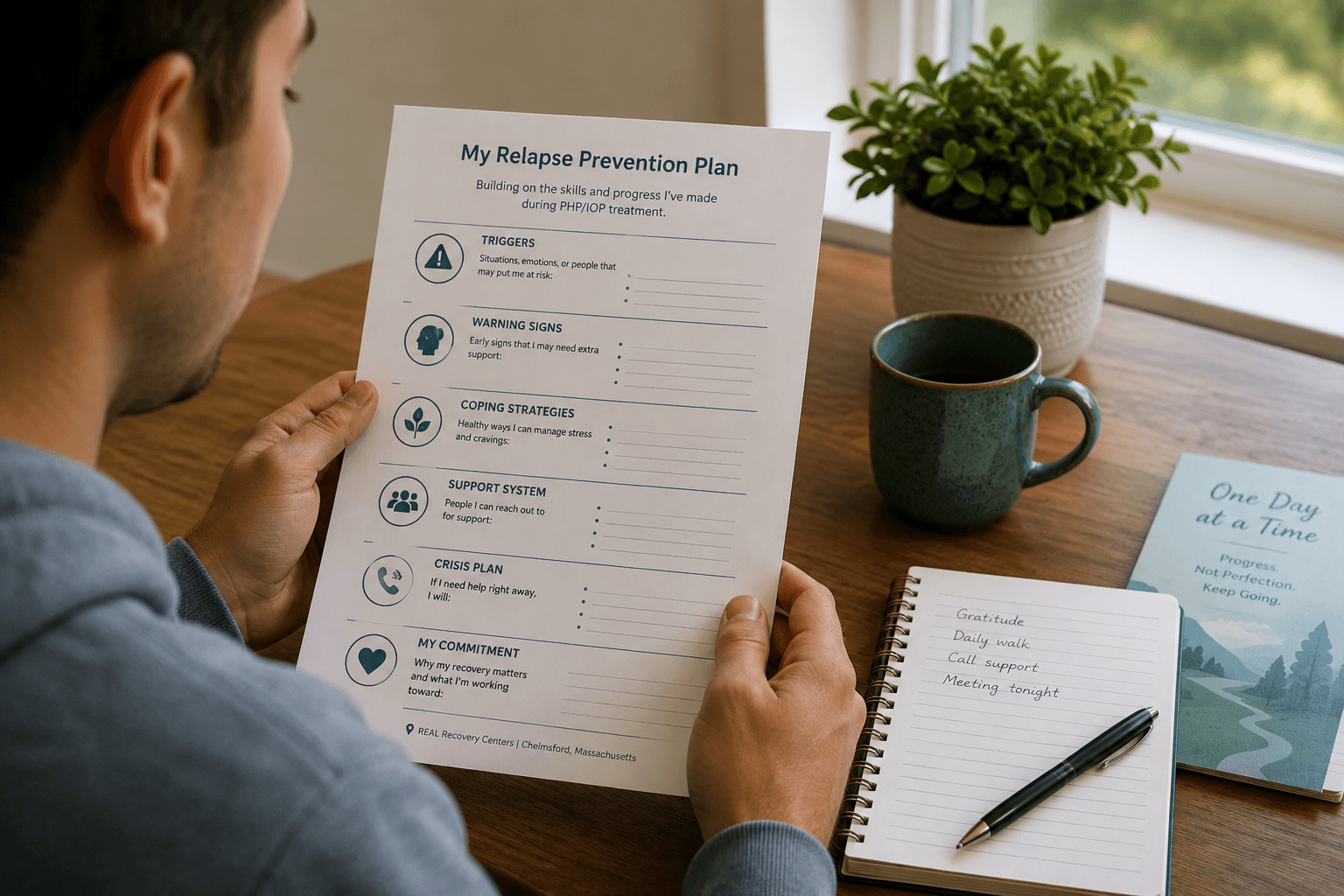
If you have been working with a treatment program, this is a natural time to discuss step-down options with your clinical team. Our alcohol addiction treatment programs in Chelmsford, Lowell, and throughout Massachusetts include aftercare planning and step-down support that keep continuity of care as your needs evolve.
If you have been managing sobriety on your own, ten weeks is an ideal point to consider adding professional support, even in a lighter form. Outpatient sessions, group therapy, or peer support programming all provide accountability that does not require starting over but adds significant protection against complacency.
How Real Recovery Centers Supports Long-Term Recovery
Reaching ten weeks is something to genuinely acknowledge. Staying well beyond it takes more than momentum alone. Our alcohol addiction treatment programs serving Chelmsford, Lowell, and communities across Massachusetts provide structured, evidence-based care at every level, from PHP to IOP to outpatient, so your support scales with where you are in the process.
If attending in person is not possible, our virtual alcohol addiction treatment program brings the same clinical quality to you at home. Massachusetts residents across the state can access our programs online without geographic limitations.
Whether you are at day one or day seventy, treatment meets you where you are and moves with you.
Call (978) 788-1870 or verify your insurance onlineto learn what your plan covers.
Frequently Asked Questions About Ten Weeks Without Alcohol
What are the most noticeable changes at ten weeks sober?
Most people at ten weeks notice significantly improved sleep, more stable mood, better cognitive function including memory and focus, reduced anxiety, and physical changes including improved energy and body composition. Brain chemistry has recalibrated enough that everyday activities often feel more rewarding than they did during active drinking.
Is my liver fully recovered at ten weeks?
For most people without pre-existing severe liver disease, liver function has improved substantially by ten weeks. Fatty liver and elevated enzymes from regular drinking typically reverse significantly within this timeframe. Full recovery depends on the extent of prior damage and individual factors, and a medical provider can give you a clearer picture through bloodwork.
Why am I still experiencing cravings at ten weeks?
Cravings at ten weeks are normal and do not mean your recovery has failed. The neural pathways associated with alcohol use do not disappear on a fixed timeline. Cravings typically become less frequent and less intense over time, but they can still be triggered by stress, specific environments, or emotional states. Having a response plan for cravings remains important even at this stage.
How do I rebuild trust in relationships at ten weeks?
Trust rebuilds through consistent behavior over time, not through a single conversation or milestone. At ten weeks, the most important thing you can do is be reliable, honest, and present. Family therapy, available through our treatment programs, can provide structure and communication tools that make this process more effective.
Should I stop going to therapy or treatment at ten weeks?
Ten weeks is not the point to stop professional support. It is a point to reassess what level of support makes sense. Many people step down from a more intensive program to outpatient sessions or peer support at this stage. Ending support entirely too early is one of the most consistent predictors of relapse.
Can I start treatment at Real Recovery Centers even if I am already ten weeks sober? Yes. Our programs in Chelmsford and Lowell serve people at every stage of recovery, including those who have already established sobriety and want continued clinical support. We also offer virtual treatment for Massachusetts residents who want to add support without commuting to a facility.