Six weeks without alcohol is where the changes that began as relief start to feel like a different life. The neurological recovery that was imperceptible in week one is measurably underway, the physical changes are visible and sustained, and the question for many people has shifted from whether stopping is possible to what comes next.
This post covers what is happening in your body and brain at the six-week mark, what the weight and physical changes look like at this stage, and how to build on what you have started.
If stopping has been harder than expected at any point in these six weeks, alcohol addiction treatment in Massachusetts is available without judgment and without requiring you to step away from work or family.
What Happens to Your Body After 6 Weeks Without Alcohol
After 6 weeks without alcohol, most people are experiencing the compounding effects of sustained physiological recovery across multiple systems simultaneously. Liver function, cardiovascular health, sleep quality, gut health, and immune function have all had six weeks to improve, and the cumulative result is often a physical baseline that feels meaningfully different from active drinking.
Liver enzyme levels are typically well within or approaching the normal range at six weeks for people without advanced liver disease. Fatty liver reversal continues, and people who have had liver-related symptoms during active drinking, including fatigue, digestive discomfort, and right-side abdominal tenderness, often report significant improvement at this stage.
Cardiovascular health continues to improve. Blood pressure, heart rate variability, and overall circulatory function are all benefiting from six weeks without the inflammatory and vasoconstrictive effects of regular alcohol consumption.
Gut health is meaningfully recovered at six weeks. The microbiome disruption caused by chronic alcohol use takes time to reverse, and six weeks of consistent abstinence produces noticeable improvements in digestion, nutrient absorption, and the gut-brain connection that influences mood and energy.
Skin quality at six weeks reflects six weeks of restored collagen production, consistent hydration, and reduced systemic inflammation. Most people describe their skin as clearer, less red, and more even-toned than at any point during active drinking.
What Is Happening in Your Brain at 6 Weeks
The brain changes at six weeks are among the most significant and least discussed aspects of alcohol recovery. Prefrontal cortex function, which governs decision-making, impulse control, and emotional regulation, is meaningfully improved at this stage compared to active drinking or early withdrawal.
Dopamine system recovery is well underway at six weeks. The reward pathways that alcohol disrupts by flooding the system with dopamine and then suppressing natural production are recalibrating, and many people describe an improved capacity to experience satisfaction from everyday activities that felt flat in early sobriety.
Craving frequency and intensity are typically reduced significantly at six weeks compared to week one or two. The neurological urgency of early sobriety has eased, and cravings, while not absent, are more manageable and more predictable.
Many people at six weeks also describe a shift in their relationship with stress. The automatic association between stress and drinking that develops over years of use is weakening, and more adaptive coping responses are becoming available as the brain continues to recover.
If anxiety, depression, or mood instability feels persistent at six weeks rather than resolving, co-occurring anxiety or depression may be a factor that benefits from integrated clinical support alongside sobriety.
Weight Loss and Physical Changes at 6 Weeks
Six weeks is often the point where weight changes become most visible and most discussed. The caloric reduction from removing alcohol, combined with improved sleep quality, more consistent energy, and often increased physical activity, produces noticeable body composition changes for most people by this stage.
The range of weight change at six weeks varies widely based on prior consumption, diet, and activity level. Someone who was drinking 14 standard drinks per week has removed roughly 1,400 to 2,800 calories per week, which over six weeks can produce a meaningful reduction in weight even without other dietary changes.
For people who have seen little weight change despite stopping alcohol, this is common and does not mean recovery is not occurring. Hormonal changes, shifts in appetite, and the body’s metabolic adjustments during recovery can slow visible weight changes even as other recovery markers improve steadily.
Physical appearance changes at six weeks extend beyond weight. Reduced facial puffiness, improved skin tone, clearer eyes, and a generally healthier complexion are consistently reported by people at this stage, often noticed first by people who see them regularly.
Building a Recovery That Lasts
Six weeks is a foundation, not a finish line. The physical and neurological recovery that has taken place over these weeks is real, and it is also fragile without the structure and support that sustain sobriety over months and years.
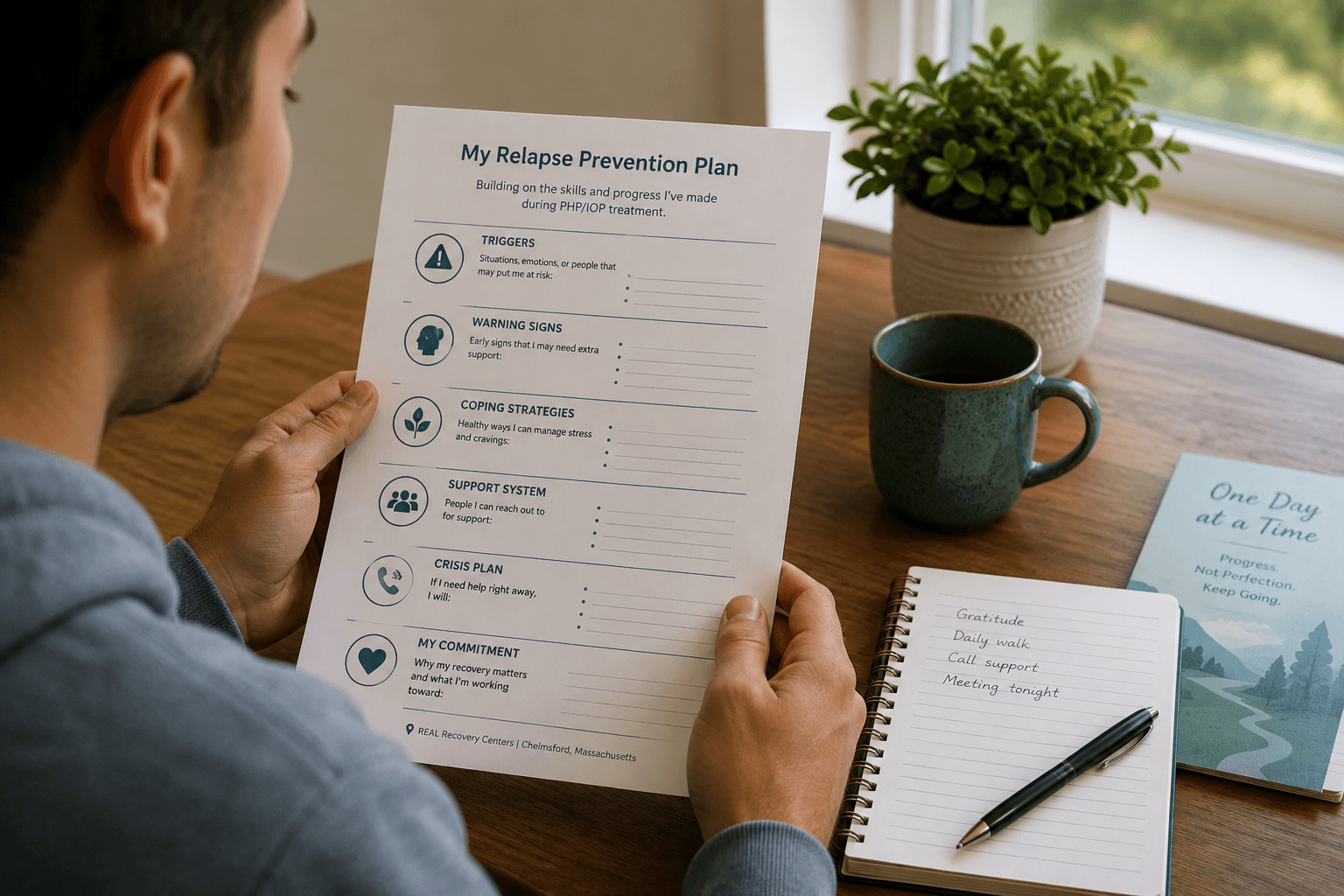
The transition from early sobriety to lasting recovery is where many people benefit most from clinical support. A proactive relapse prevention plan identifies high-risk situations, builds specific coping responses, and creates accountability structures before they are needed rather than in the middle of a crisis.
For people who want ongoing clinical support beyond the initial weeks, addiction aftercare programs in Massachusetts provide the continued therapeutic contact, peer connection, and structured accountability that significantly improve long-term sobriety outcomes.
Real Recovery Centers is a BSAS-licensed outpatient addiction treatment program in Chelmsford, Massachusetts.
Our clinical team provides evidence-based care for alcohol use disorder, with flexible scheduling designed to work around work and family commitments. Most major Massachusetts insurance plans are accepted.
Verify your insurance coverage in minutes, or call 24/7: (978) 788-1870
Treatment Options in Massachusetts
Whether you are six weeks into sobriety and looking to build on it with clinical support, or you are reading this because you want to understand what stopping would look like, outpatient treatment in Massachusetts is structured around your life, not the other way around.
An intensive outpatient program in Massachusetts provides structured clinical support three to four days per week, including individual therapy, group work, and relapse prevention planning, built around a normal work and family schedule.
Those who want more intensive daily clinical structure can access a partial hospitalization program, which provides five to six days per week of programming while allowing a return home each evening.
For those who prefer remote access or live outside commuting distance of Chelmsford, a virtual treatment program delivers the same evidence-based clinical support through a telehealth format.
Frequently Asked Questions About 6 Weeks Without Alcohol
What happens to your body after 6 weeks of no alcohol?
After six weeks without alcohol, most people are experiencing the compounding effects of sustained recovery across liver function, cardiovascular health, gut health, sleep quality, skin appearance, and brain chemistry. Prefrontal cortex function is meaningfully improved, craving intensity has typically reduced, and many of the physical changes that began in the first two weeks are now fully established. Recovery continues beyond six weeks, but the foundation at this stage is significantly different from where it started.
How much weight can you lose in 6 weeks without alcohol? Weight loss at six weeks depends on how much a person was drinking and their overall diet and activity level. Someone removing 14 standard drinks per week eliminates roughly 1,400 to 2,800 calories per week, which over six weeks can produce a noticeable and sustained reduction in weight. People who see minimal weight change at six weeks should know that other recovery markers, including liver function, sleep quality, and cognitive clarity, may be improving significantly even when the scale does not reflect it.
What does 6 weeks of no alcohol do to your brain?
Six weeks of abstinence produces meaningful recovery in the prefrontal cortex, which governs decision-making, impulse control, and emotional regulation. The dopamine system, which alcohol disrupts by flooding natural reward pathways and suppressing baseline production, is recalibrating and moving toward a more stable baseline. Most people at six weeks describe noticeably improved stress tolerance, better decision-making, and reduced craving frequency compared to the early weeks of sobriety.
Is 6 weeks without alcohol long enough to make a real difference?
Yes, six weeks is long enough to produce real, measurable, and visible differences across multiple physical and psychological dimensions. Liver enzyme levels, blood pressure, sleep quality, skin appearance, cognitive function, and craving intensity are all meaningfully improved compared to active drinking. Six weeks is a significant milestone, and it is also the beginning of a longer recovery trajectory: the benefits that have compounded over these weeks continue to build with sustained sobriety.
Six weeks without alcohol is where the effort of stopping starts to become the reward of having stopped. The changes that accumulated quietly over these weeks are real, sustained, and worth protecting.
What comes next is built on this foundation, and the decisions you make in the weeks ahead determine how far that foundation takes you.
Ready to take the next step?
If you are in Massachusetts, the team at Real Recovery Centers is available 24 hours a day, 7 days a week. Call (978) 788-1870 or contact us here.
If you are outside Massachusetts, our virtual treatment program may be an option for you.
This post is part of the Real Recovery Centers alcohol-free series. Read the full series: one week no alcohol | two weeks no alcohol | three weeks no alcohol | four weeks no alcohol | five weeks no alcohol | ten weeks no alcohol
Update series nav links as each post goes live. Only link to published posts.