

Many people in Massachusetts quietly struggle with depression while also relying on alcohol or drugs to cope. Over time, the two can become deeply connected. Depression makes daily life feel heavy and overwhelming. Substance use may seem like short-term relief, but it often makes emotional symptoms worse.
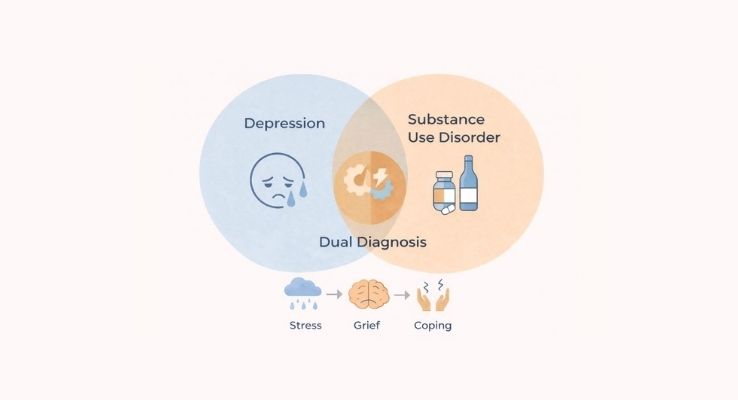
This pattern is known as dual diagnosis, when a person experiences both a mental health condition and a substance use disorder at the same time. Dual diagnosis treatment Massachusetts programs are designed to address both together, not separately, because treating only one often leads to relapse.
If you or someone you love has tried treatment before and still feels stuck, this may explain why. Integrated care recognizes that depression and substance use influence each other and require coordinated support. Real Recovery Centers in Chelmsford, MA provides outpatient dual diagnosis care built around this understanding, helping people stabilize while continuing their lives in the community.
What Is Dual Diagnosis Treatment in Massachusetts?
Dual diagnosis treatment is an integrated approach that treats mental health conditions and substance use disorders at the same time. Rather than separating care into different systems, both are addressed through one coordinated treatment plan.
Depression and substance use often reinforce each other. Alcohol or drugs may temporarily numb emotional pain, but they can disrupt brain chemistry, worsen mood, and increase isolation. Depression, in turn, can intensify cravings and reduce motivation to stay sober.
In Massachusetts, effective dual diagnosis treatment focuses on:
- Comprehensive mental health assessment
- Substance use counseling
- Evidence-based therapy
- Medication management when appropriate
- Ongoing support across levels of outpatient care
This integrated model improves stability, reduces relapse risk, and supports long-term recovery.
Why Depression and Substance Use Occur Together
Understanding why these conditions overlap helps reduce shame and self-blame. This is not about weakness or lack of effort. It is about how the brain and stress systems respond to pain.
The self-medication cycle
Many people first turn to substances to cope with untreated depression or anxiety. Alcohol may quiet racing thoughts. Opioids may numb emotional pain. Stimulants may provide energy when depression causes exhaustion.
Over time, the brain learns to rely on substances for relief. What begins as coping can develop into dependence. Unfortunately, substances ultimately worsen depression, creating a cycle that becomes difficult to break without professional support.
Shared brain pathways
Depression and substance use affect similar brain systems tied to mood, reward, and stress. Substances artificially activate reward pathways, which can feel especially powerful for someone already experiencing low mood or emotional numbness.
Repeated use disrupts natural balance. When substances wear off, depressive symptoms often feel stronger. This reinforces continued use and deepens emotional distress.
Common risk factors
Several factors increase the likelihood of dual diagnosis:
- Trauma or chronic stress
- Family history of mental health or substance use disorders
- Major life transitions or losses
- Long-term untreated depression
Recognizing these factors helps reframe dual diagnosis as a treatable health condition, not a personal failure.
Signs You May Need Dual Diagnosis Treatment
Many people do not realize integrated care exists. Instead, they cycle through short-term solutions that never fully address the problem.
Mental health symptoms to watch for
- Persistent sadness, emptiness, or hopelessness
- Anxiety or panic attacks
- Sleep problems or constant fatigue
- Difficulty concentrating or making decisions
- Loss of interest in once-enjoyed activities
- Feelings of worthlessness or guilt
When substance use and depression overlap
- Using alcohol or drugs to manage emotions
- Mental health symptoms that persist even during reduced use
- Previous treatment that focused only on substance use
- Difficulty staying sober during depressive episodes
- Feeling unable to cope without substances
If several of these apply, dual diagnosis treatment Massachusetts programs can help clarify what level of care fits your needs.
How Dual Diagnosis Treatment Differs From Traditional Addiction Treatment
Traditional sequential treatment
Historically, care often focused on treating substance use first, then mental health later. Some people were told they needed to be sober before depression could be addressed.
This approach often fails because untreated depression continues to drive cravings and relapse.
Integrated dual diagnosis care
Dual diagnosis treatment addresses both conditions simultaneously. One care team creates a unified plan that considers how depression and substance use interact.
Comparison overview:
| Traditional Approach | Dual Diagnosis Treatment |
| Treat one condition at a time | Treat both conditions together |
| Separate providers | Coordinated care team |
| Fragmented plans | Unified treatment plan |
| Higher relapse risk | Greater long-term stability |
This integrated approach helps people build coping skills for both emotional distress and cravings at the same time.
Can Depression and Addiction Be Treated Together?
Yes. Depression and substance use disorders can and should be treated at the same time. Integrated dual diagnosis treatment addresses how each condition affects the other, reducing relapse risk and supporting long-term recovery.
Evidence-Based Therapies Used in Dual Diagnosis Care
Dual diagnosis treatment Massachusetts programs rely on therapies proven to support both mental health and recovery.
Cognitive Behavioral Therapy (CBT)
CBT helps people identify thought patterns that fuel depression and substance use. It focuses on replacing negative beliefs with healthier perspectives and developing practical coping strategies.
Dialectical Behavior Therapy (DBT)
DBT supports emotional regulation, distress tolerance, and mindfulness. These skills are especially helpful for people who experience intense emotions or use substances to cope.
Medication management
Medication may be part of treatment when appropriate. Care teams carefully monitor medications to support both mental health stability and recovery goals.
For education on medication interactions and safety, readers may find value in learning more about the risks of combining gabapentin and hydrocodone.
Levels of Dual Diagnosis Treatment in Massachusetts
Choosing the right level of care depends on symptom severity, daily responsibilities, and support needs.
Partial Hospitalization Program (PHP)
PHP provides structured, day-based treatment several days per week while allowing individuals to return home in the evenings. It is well-suited for people needing intensive support without residential care.
Learn more about Real Recovery Centers’ Partial Hospitalization Program in Massachusetts.
Half-Day Treatment Program
The Half-Day Treatment Program offers consistent clinical support with greater flexibility. It helps individuals stabilize while gradually resuming work or family responsibilities.
Outpatient Program (OP)
Outpatient treatment involves fewer weekly sessions and focuses on maintaining progress, medication management, and relapse prevention.
Explore how outpatient rehab in Massachusetts supports lasting change.
Aftercare Support
Aftercare provides continued guidance, peer connection, and accountability once structured treatment ends. This ongoing support helps protect long-term recovery.
How Substance Use Can Affect Depression Over Time
Different substances impact mood and brain chemistry in different ways. For example, stimulants may intensify anxiety and mood crashes, while alcohol is a known depressant.
Understanding detection timelines and lingering effects can be helpful. Learn more about cocaine detection times and factors affecting elimination.
What to Expect in Dual Diagnosis Treatment at Real Recovery Centers
Comprehensive assessment
Treatment begins with a full evaluation of mental health symptoms, substance use patterns, medical history, and life circumstances. This ensures care is personalized, not generic.
Coordinated care team
Clients work with licensed clinicians who collaborate closely. This coordination prevents conflicting guidance and keeps treatment focused on the whole person.
Structured yet flexible scheduling
Programs are designed to support recovery while allowing individuals to maintain daily responsibilities whenever possible.
Frequently Asked Questions
What is dual diagnosis treatment?
Dual diagnosis treatment addresses mental health conditions and substance use disorders together through integrated, coordinated care.
Is outpatient dual diagnosis treatment effective?
Yes. Many people benefit from outpatient programs that combine structure, flexibility, and ongoing clinical support.
Does insurance cover dual diagnosis treatment in Massachusetts?
Most insurance plans, including MassHealth and private providers, offer coverage. Verification helps clarify benefits.
How long does dual diagnosis treatment last?
Length varies based on individual needs. Many people participate for several months, adjusting intensity as stability improves.

Finding Dual Diagnosis Treatment in Massachusetts That Treats Both Conditions
Living with depression and substance use can feel isolating and overwhelming. Integrated care offers a clearer path forward by addressing both together, not in isolation.
If you or someone you love is ready to explore recovery options, the Chelmsford team at Real Recovery Centers is here to help. You can speak with a treatment specialist to verify insurance or learn which program may fit your needs.
Recovery. Restored. Sustained.