Finishing a structured program feels like it should be the hard part being over. In practice, the first few weeks after PHPor IOP ends are often the riskiest stretch of early recovery, not the safest.
That’s not a discouraging thing to hear. It’s useful information.
Relapse prevention planning built specifically for this transition looks different from general advice about avoiding triggers, and knowing the difference matters.
Why This Specific Transition Is Higher Risk Than People Expect
The first few weeks after finishing PHP or IOP carry the highest relapse risk of early recovery, since the structure, supervision, and daily accountability of a program end all at once. A workable plan for this window names your next level of care, your specific triggers, and exactly who to call in a crisis, rather than offering general advice about avoiding stress, though the plan should keep evolving well past the initial weeks as recovery continues.
This isn’t a sign that the program failed or that you didn’t try hard enough. It’s a predictable gap that a good discharge plan addresses directly, rather than assuming motivation alone will carry someone through it.
What a Real Discharge Plan Actually Includes
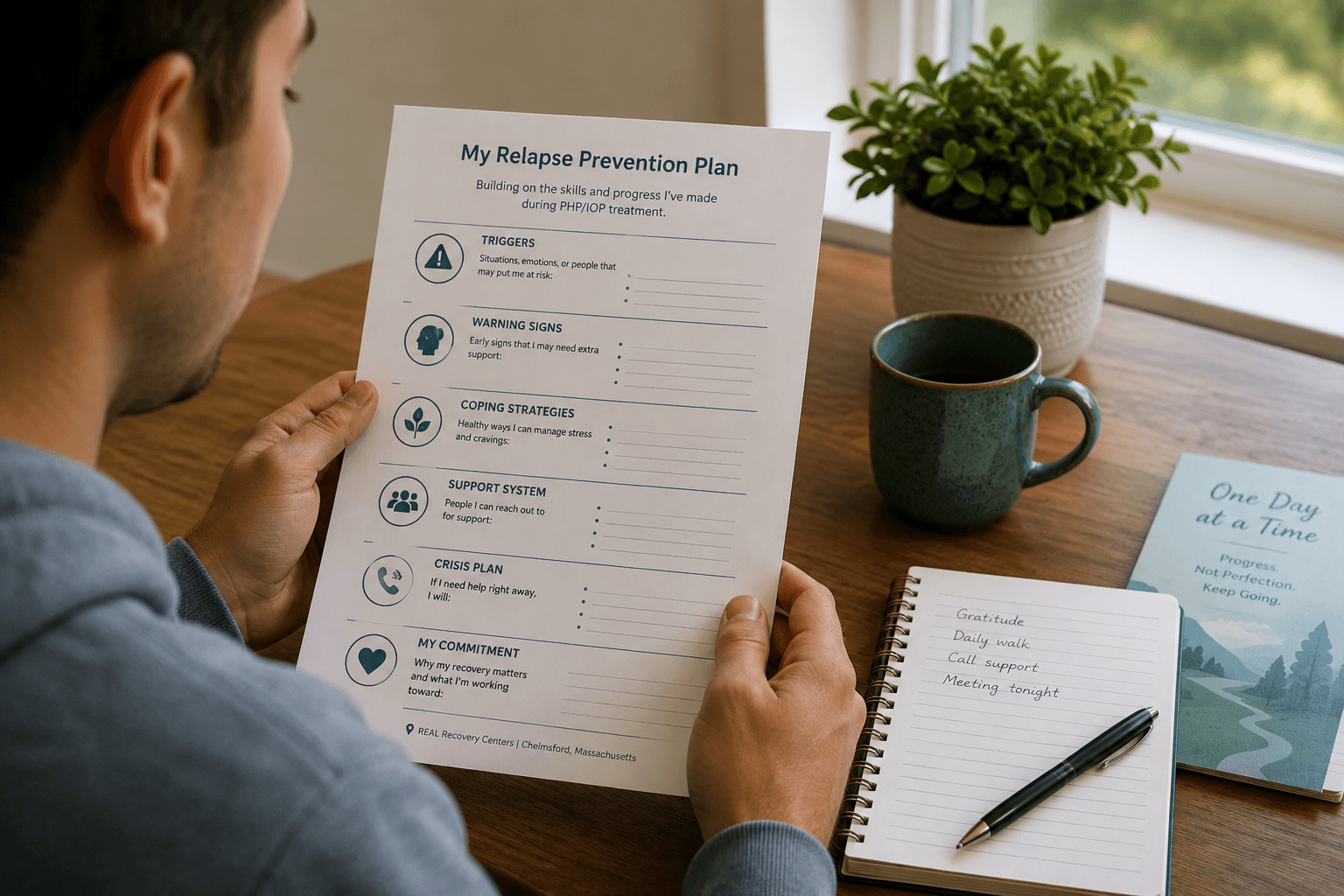
A discharge plan worth having is built before the last session, not scrambled together on the way out the door. It should name your next level of care specifically, whether that’s stepping down from a fuller schedule to a lighter one or transitioning to standard outpatient counseling, along with the exact date and time of your first appointment at that next level.
It should also name your specific triggers, not generic ones. Vague warnings about “stress” or “social situations” are far less useful than a plan built around your actual patterns, the particular people, places, and moments that have preceded use for you in the past.
A workable plan also identifies who you’ll call in the first 72 hours if a craving hits harder than expected, before you need that number, not while you’re searching for it in a moment of crisis. Waiting until the moment you need it is exactly when it’s hardest to think clearly enough to find it.
Ongoing aftercare support should also be named specifically in the plan, not left as a vague “stay connected” suggestion. That might mean a standing weekly counseling appointment, a specific support group and meeting time, or scheduled check-ins with your clinical team during the first month, whatever fits your actual situation rather than a generic template.
The Difference Between Stepping Down and Stopping Altogether
Not everyone finishing PHP moves straight to independent life. For many people, the safer path is stepping down to a lighter structured level, such as standard outpatient care, rather than moving from a full schedule directly to nothing.
That step-down isn’t a sign that someone isn’t ready to be independent. It’s a deliberate reduction in support intensity, timed to match how stable someone actually is, rather than how stable a fixed program length assumes everyone will be by a certain date.
What to Watch For in the First Few Weeks
A handful of early warning signs tend to show up before an actual setback does. Skipping a scheduled counseling session, pulling back from the people who were part of your support during treatment, or telling yourself “just this once” about a person or place your plan flagged as a trigger are all worth noticing right away, not explaining away.
None of these signs mean a setback is guaranteed. They’re simply the moment a plan is designed for, the point where reaching out to your counselor or support group matters more than waiting to see how things go.
If You’re Already Struggling Right Now
If you’ve already used again, or you’re in the middle of a craving that feels bigger than you can manage alone, don’t wait for a scheduled appointment. Call your counselor’s crisis line or Real Recovery Centers at (978) 788-1870 now, and if you’re in immediate danger, call 911.
A setback during this transition doesn’t erase the work you did in treatment, and how quickly you reach out matters more than whether a setback happened at all.
How Real Recovery Structures This Transition
Real Recovery Centers is a BSAS-licensed outpatient provider in Chelmsford, and our clinical team builds discharge planning into treatment from early on rather than leaving it for the final session. That means your next level of care, whether that’s a lighter program schedule or standard outpatient counseling, is identified and scheduled well before your current program ends.

We accept most major Massachusetts insurance plans, and our admissions team can verify your coverage for continuing care before your current level of treatment ends. Scheduling for that next level stays flexible around work, school, and family commitments.
Call (978) 788-1870 to talk through what step-down planning looks like for your specific situation.
Family’s Role in This Transition
Family involvement matters here too, though differently than during active treatment. The people you live with or see regularly need to understand what the first few weeks look like, what to watch for, and what actually helps versus what feels helpful but isn’t.
Well-meaning check-ins that feel like surveillance can backfire, while a simple, agreed-upon plan for how to raise a concern tends to work better. If family therapy was part of your treatment, this transition is often where those sessions pay off most directly, translating what was discussed in session into an actual agreement about how the household will handle the weeks ahead.
A useful agreement usually covers three things: what specifically a family member should say if they notice a warning sign, who they should call if they’re worried, and what they should avoid doing, like confronting someone in the middle of an argument or searching their belongings without any prior agreement to do so. Vague intentions to “be supportive” tend to fall apart under real stress without something concrete like this in place ahead of time.
Frequently Asked Questions
How long should a relapse prevention plan cover?
Most plans focus specifically on the first 90 days after a program ends, since that window carries the highest risk, though the plan should evolve as you move further from active treatment.
What if I don’t have specific triggers I can name?
That’s common, and part of what discharge planning sessions are for. A counselor can help identify patterns from your treatment history that you may not have labeled as triggers yet.
Does insurance cover the outpatient counseling that follows PHP or IOP?
Most major Massachusetts insurance plans cover continuing outpatient counseling as part of a full continuum of care. Verify your insurance before your current program ends so there’s no coverage gap.
Is it normal to feel more anxious after finishing a program than during it?
Yes, the structure and support you had during active treatment worked like scaffolding, and its absence can feel destabilizing even when you’re doing well clinically. That’s exactly why a plan for this window matters.
Do I have to step down to a lighter program, or can I just stop treatment altogether?
It depends on your clinical stability, and that’s a decision worth making with your treatment team rather than on your own. Many people benefit from a deliberate step-down period rather than moving straight from a full schedule to no structured support at all.
Building Your Plan Before You Need It
If you’re in Massachusetts and approaching the end of a program, or supporting someone who is, call Real Recovery Centers at (978) 788-1870 or reach out through our contact page to talk through discharge planning with our Chelmsford clinical team.
If you’re outside Massachusetts, our virtual treatment options may be available depending on your state, since full program participation still requires Massachusetts presence. A national helpline can help connect you with licensed options in your own state.

About Real Recovery Centers
Real Recovery Centers is a BSAS-licensed outpatient addiction treatment provider at 67 Parkhurst Avenue, Chelmsford, Massachusetts (01824). We serve Greater Lowell, Middlesex County, and surrounding Massachusetts communities with PHP, IOP, outpatient care, dual diagnosis treatment, and aftercare support.
Most major Massachusetts insurance plans are accepted. 24/7 admissions: (978) 788-1870.

Mitchell Grant Cohen
Dr. Mitchell G. Cohen is a board-certified Internal Medicine specialist with over 34 years of experience in patient-centered healthcare. A graduate of Hahnemann University School of Medicine, Dr. Cohen completed his internship at the University Health Center of Pittsburgh, where he gained invaluable hands-on experience. He is also a certified addiction specialist, holding membership with the American Society of Addiction Medicine (ASAM).
Currently based in Nashua, NH, Dr. Cohen is affiliated with Saint Joseph Hospital, where he provides comprehensive care focusing on both internal medicine and addiction treatment. His expertise includes prevention, diagnosis, and management of adult diseases, as well as specialized care for individuals facing substance use disorders.
Dr. Cohen is committed to fostering open communication, ensuring his patients are fully informed and empowered to make confident decisions about their health and treatment options.