You want treatment, but you can’t miss two weeks of work, or you live an hour from the nearest program with no reliable way to get there five days a week.
Virtual addiction treatment exists for exactly this problem, but it’s fair to ask whether care delivered over a screen actually holds up against walking into a building.
If you’re weighing whether virtual treatment fits your life, here’s what the research and Massachusetts programs actually show, not just what a brochure promises.
What Is Virtual Addiction Treatment?
Virtual addiction treatment delivers structured, licensed care through secure video sessions instead of an in-person facility. In Massachusetts, BSAS-licensed providers offer virtual partial hospitalization (PHP), intensive outpatient (IOP), and standard outpatient programs that include individual therapy, group counseling, and coordinated medication management. It is not a substitute for medical detoxification or 24-hour supervision, both of which still require an in-person level of care.
That distinction matters: virtual treatment is a delivery method, not a lighter version of the program.
The clinical structure, licensing standards, and staff credentials are supposed to match in-person care exactly. The difference is where you sit for your sessions.
What Does the Research Actually Say?
The Substance Abuse and Mental Health Services Administration (SAMHSA) published an evidence-based resource guide in 2021 specifically reviewing telehealth for the treatment of substance use disorders and serious mental illness. The guide distills the available research into practice recommendations rather than treating telehealth as an unproven experiment.
A separate review published in Psychiatric Services, a peer-reviewed journal of the American Psychiatric Association, looked at eight published studies comparing telehealth-delivered addiction treatment to in-person care. Seven of those eight studies found telehealth performed about as well as in-person treatment on the measures that matter most: how long people stayed in treatment, the strength of the relationship with their counselor, and substance use outcomes.
That’s a meaningful finding, though a modest one. The honest summary is that virtual treatment works about as well as in-person care for the right person under the right conditions, not that it works better.
What this research doesn’t say is that virtual treatment is right for everyone.
“Isn’t This Just Watching Someone on a Screen?”
That’s the real skepticism worth naming, since it usually sits underneath “does it work.” Virtual treatment isn’t self-guided or app-based: a licensed program means real-time, live sessions with a therapist and a group, not pre-recorded videos or a chatbot standing in for a clinician.
What gets lost is the informal connection of a waiting room or a hallway chat before group starts, which is a real tradeoff worth naming. For many people, though, it’s worth it if it means actually showing up consistently instead of missing sessions over a commute or work conflict.
Who Is a Good Fit for Virtual Treatment, and Who Isn’t
Virtual treatment tends to work well for adults who are medically stable and have a private, substance-free space at home. It’s a strong option if the main thing standing between you and treatment is a scheduling conflict rather than a medical safety concern.
People stepping down from a higher level of care or balancing treatment with a job or caregiving responsibilities often do well with virtual IOP or outpatient. Geography matters too: if you live in a rural part of Massachusetts or over an hour from the nearest program, virtual treatment can mean the difference between consistent care and missed sessions.
Privacy is another factor people weigh, sometimes more than they say out loud. Attending from home means skipping the risk of running into a coworker or neighbor, which removes a real barrier for some people.
Virtual treatment is not the right starting point if you need medical detoxification, 24-hour supervision, or you’re in an active crisis. In those situations, safety requires an in-person level of care, and a good admissions team will tell you that directly instead of trying to fit you into a virtual slot anyway.
If any part of this section describes where you are right now, it’s worth talking to someone today rather than waiting to see if things settle on their own.
Real Recovery Centers is a BSAS-licensed provider offering virtual PHP, IOP, and outpatient programs with flexible daytime scheduling built around work and family commitments. Our team accepts most major insurance plans and can verify your coverage before you commit to anything.
Call (978) 788-1870 to talk through whether virtual care fits your situation.
How Does Virtual Treatment Actually Work Day to Day?
The process usually starts with a confidential clinical assessment, often conducted over video. From there, a program verifies your insurance and walks you through the technology before your first real session.
Once you’re enrolled, a typical week looks a lot like an in-person schedule, with individual counseling, group therapy, and clinical check-ins on a set schedule through a secure, HIPAA-compliant platform. Most programs, including virtual IOP and virtual PHP options in Massachusetts, only require a device with a camera, a stable connection, and a room where you won’t be interrupted.

What changes as you progress is the intensity, not the format. Someone starting in virtual PHP might attend structured programming most of the day, then step down to virtual IOP as a clinical team adjusts the level of care based on how you’re actually doing.
A licensed Massachusetts program generally requires you to be physically located in the state during your sessions, even though the care is delivered remotely. That’s a licensing requirement, not a technical limitation, and it’s why virtual programs can’t simply serve anyone with an internet connection nationwide.
Combining Virtual Care With Other Support
Medication support, coordinated through virtual appointments, can matter if cravings or withdrawal symptoms are part of what you’re managing. If that sounds relevant, the evidence behind how MAT works and why it’s considered safe is worth reviewing.
Dual diagnosis support, for co-occurring conditions like anxiety or depression, is built into most virtual programs rather than treated as an add-on. Addressing both at once tends to produce steadier progress than treating substance use in isolation.
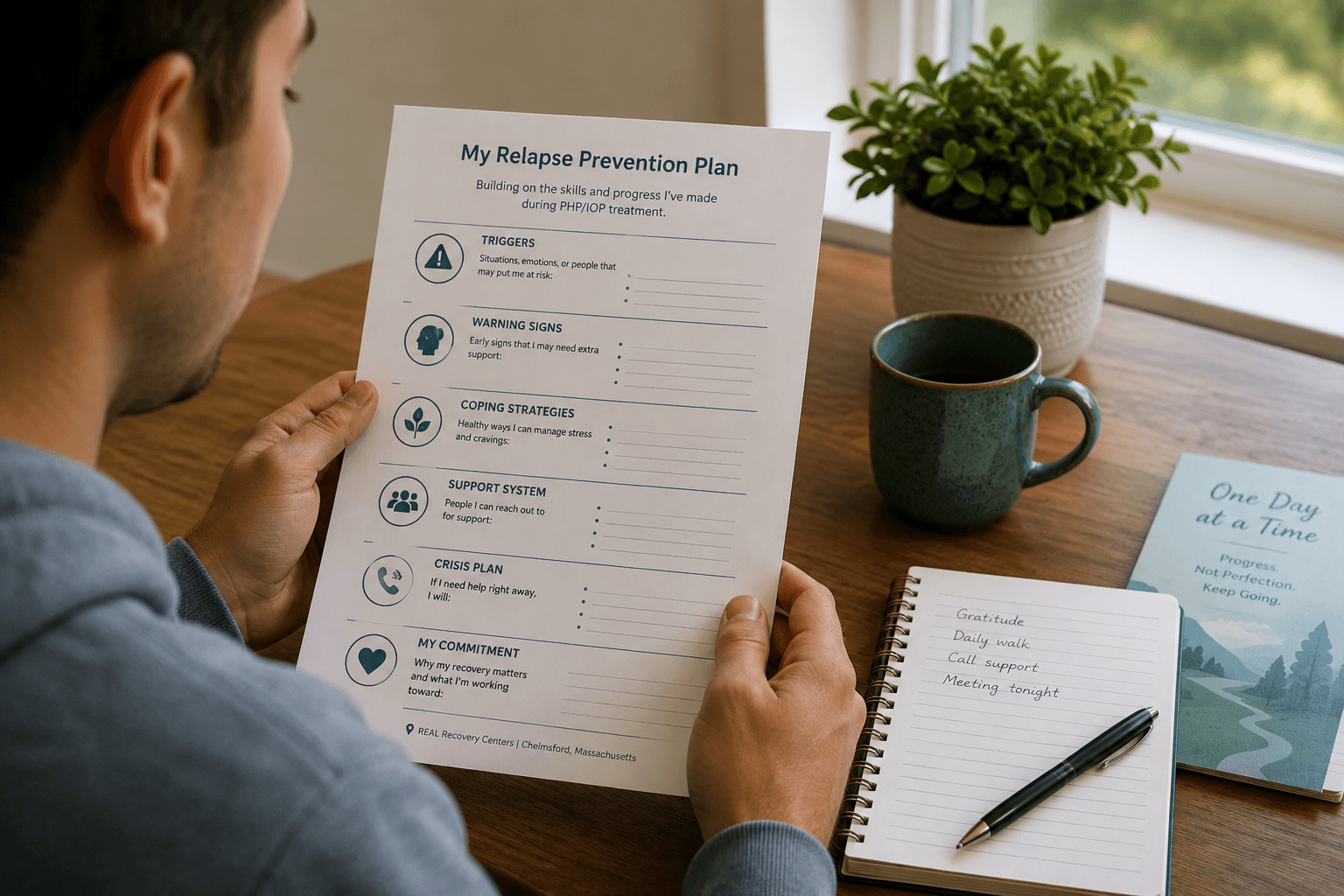
Relapse prevention planning works the same way virtually as it does in person, since it’s built on skills practice rather than a physical location. Some clinicians see an advantage in rehearsing those skills in the actual environment where you’ll need them.
What About Missing Work?
Missing work is often the real reason someone looks into virtual treatment, not the technology and not even the commute. Massachusetts and federal law both offer real job protections for people taking time for treatment, and virtual programs can reduce how much time away from work is necessary in the first place.
For many people that’s the difference between getting help now and putting it off, since substance use disorders can become harder to treat the longer they go unaddressed. Virtual care exists in part to remove that scheduling excuse, not because the commute was ever really the whole story.
Frequently Asked Questions
Does research actually support virtual addiction treatment, or is it just convenient?
Peer-reviewed research, including a review of eight studies published in Psychiatric Services, has found that virtual addiction treatment performs about as well as in-person care on retention, therapeutic relationship, and substance use outcomes. It’s not shown to be superior to in-person treatment, but for the right candidate, it holds up as a legitimate clinical option rather than a fallback.
How do clinicians decide if someone is a good fit for virtual care instead of in-person treatment?
Clinicians typically look at medical stability, whether you have a safe and substance-free home environment, and whether your needs can be met without 24-hour supervision. An honest assessment should be willing to recommend a higher level of care if virtual treatment isn’t appropriate, rather than enrolling everyone by default.
Can virtual treatment include medication-assisted treatment?
Yes. Medication management can be coordinated through virtual appointments as part of a broader treatment plan that also includes individual and group therapy.
What happens if virtual treatment isn’t providing enough support?
A well-run virtual program monitors your progress and can step you up to a more intensive virtual level of care, such as moving from outpatient to IOP, or refer you to in-person or residential treatment if your needs change. Treatment plans are meant to shift as you do, not lock you into one format regardless of how things go.
Is virtual treatment private, and who can tell I’m attending?
Sessions are conducted through HIPAA-compliant platforms, and your privacy protections are the same as they would be for in-person care. What stays private between you and your treatment team isn’t affected by the format the sessions are delivered in.

Getting Started
If you’re in Massachusetts and think virtual treatment might fit your life, the most useful next step is a real conversation. Call Real Recovery Centers at (978) 788-1870 or reach out through our contact page to talk through your options.
If you’re reading this from outside Massachusetts, our virtual programs are licensed to serve people who are physically located in the state during sessions, so they may not be an option for you directly. A good next step is searching for a BSAS-equivalent licensed telehealth provider in your own state.
Asking whether virtual treatment actually works, instead of just hoping it does, is already a good sign.

Mitchell Grant Cohen
Dr. Mitchell G. Cohen is a board-certified Internal Medicine specialist with over 34 years of experience in patient-centered healthcare. A graduate of Hahnemann University School of Medicine, Dr. Cohen completed his internship at the University Health Center of Pittsburgh, where he gained invaluable hands-on experience. He is also a certified addiction specialist, holding membership with the American Society of Addiction Medicine (ASAM).
Currently based in Nashua, NH, Dr. Cohen is affiliated with Saint Joseph Hospital, where he provides comprehensive care focusing on both internal medicine and addiction treatment. His expertise includes prevention, diagnosis, and management of adult diseases, as well as specialized care for individuals facing substance use disorders.
Dr. Cohen is committed to fostering open communication, ensuring his patients are fully informed and empowered to make confident decisions about their health and treatment options.