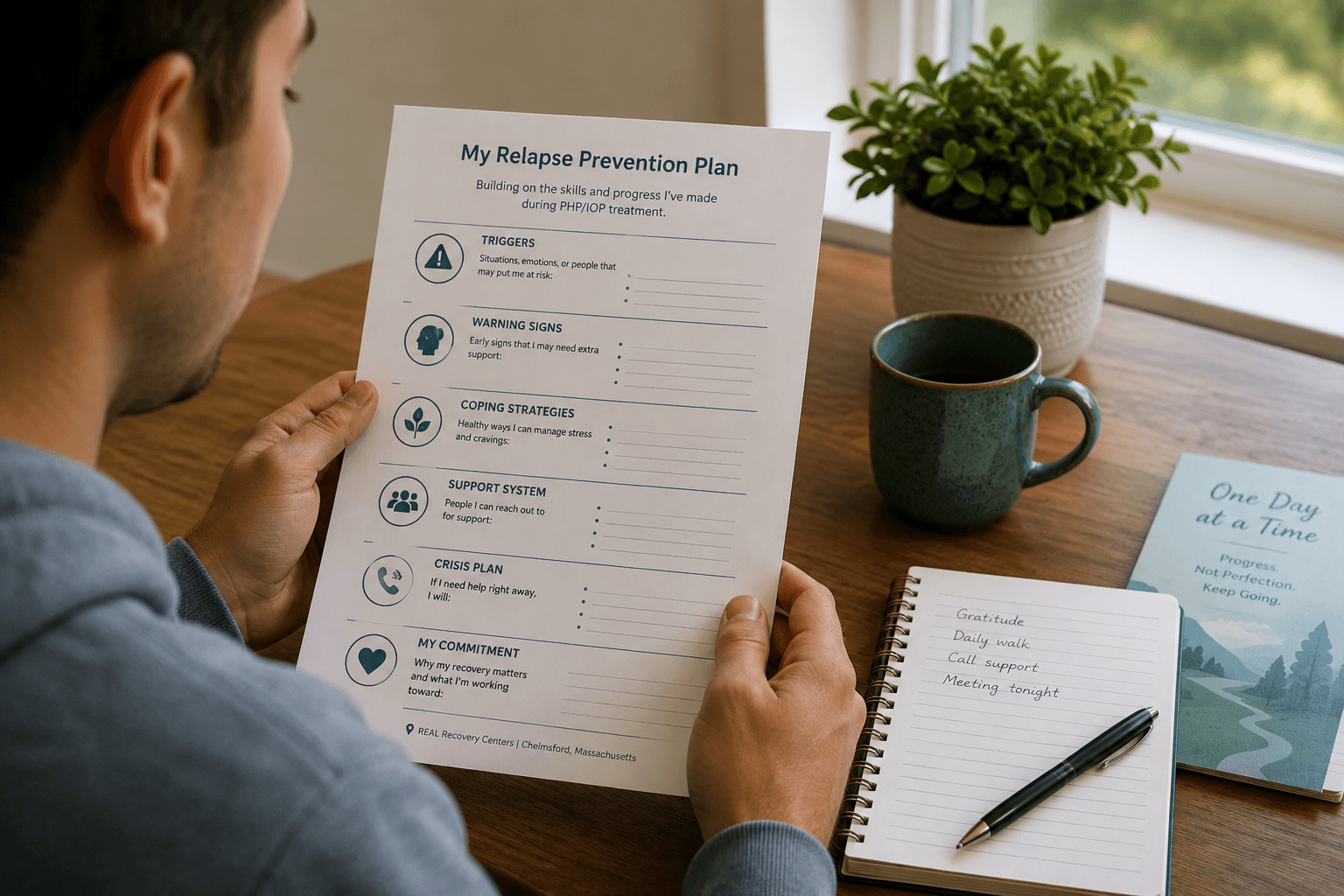

When January rolls around, there’s this pressure to fix everything overnight. But here’s the truth about sustainable recovery: it doesn’t happen with willpower alone. You need a personalized recovery plan Massachusetts residents can actually stick with—one that adapts to your unique circumstances, your support system, and the reality of your daily life.
A recovery plan goes way beyond deciding to quit. It’s a comprehensive roadmap addressing your physical health, mental well-being, relationships, triggers, and long-term goals. For people in Massachusetts seeking lasting change, building this plan with professional guidance and evidence-based treatment creates the foundation you need for real transformation.
Whether you’re just starting to consider treatment or you’ve completed an inpatient program and need ongoing support, having a clear plan makes all the difference. Real Recovery Centers in Chelmsford offers flexible programs: PHP, IOP, and outpatient services that help Massachusetts residents build personalized plans that work with their lives, not against them.
What Makes a Recovery Plan “Sustainable”?
A sustainable recovery plan Massachusetts residents can maintain long-term, including personalized treatment goals, identified triggers and coping strategies, mental health support for co-occurring conditions, a strong support network, and realistic daily routines that accommodate work and family responsibilities while prioritizing continued care.
Most people think recovery planning means “staying clean.” But sustainable recovery addresses the whole person: recognizing that substance use usually develops alongside untreated mental health conditions, unresolved trauma, or overwhelming life stressors.
Here’s what a plan that actually lasts helps you do: identify what triggers your substance use, develop healthy ways to cope with stress and anxiety, build a support network you can count on, and create structure in your daily life. You’ll also address any co-occurring mental health conditions, set realistic goals for different areas of life, and plan for challenging situations before they blindside you.
The best plans stay flexible enough to adapt as your needs change, yet structured enough to provide daily guidance and accountability.
Key Components of an Effective Recovery Plan for Massachusetts Residents
1. Professional Treatment That Matches Your Current Needs
Recovery isn’t one-size-fits-all. Some people benefit from intensive daily programming. Others need flexible outpatient support that fits around work and family obligations.
Partial Hospitalization Programs (PHP) provide structured treatment five to six days per week for people who need significant support but don’t require round-the-clock residential care. This level works well right after detox or when symptoms are severe. Understanding the difference between PHP and other treatment levels helps you figure out which intensity matches where you are right now.
Intensive Outpatient Programs (IOP) offer treatment three to five days per week, typically in the evenings. You can maintain work or school commitments while getting the structure you need. Learning what to expect from the IOP program structure shows how this level provides intensive support without putting your entire life on hold.
Traditional Outpatient Services provide ongoing therapy and support, usually one to two times per week. This works for people who’ve completed higher levels of care or need less intensive intervention. Exploring outpatient treatment options reveals how flexible programming supports long-term recovery maintenance.
2. Dual Diagnosis Care for Co-Occurring Conditions
According to the Substance Abuse and Mental Health Services Administration (SAMHSA), co-occurring disorders are common among people seeking addiction treatment. Your recovery plan needs to address both substance use and mental health conditions at the same time; not one after the other.
Integrated treatment combining addiction therapy with mental health care produces better outcomes than treating these separately. You’re looking at individual therapy that addresses both issues, psychiatric medication management when appropriate, evidence-based approaches like CBT or DBT, and trauma-informed care for people with a history of trauma.
Understanding how trauma-informed treatment approaches work helps many Massachusetts residents recognize why integrated care matters for lasting recovery.
3. Medication-Assisted Treatment (MAT) When Appropriate
For people recovering from opioid or alcohol use disorders, medication-assisted treatment significantly improves outcomes. Buprenorphine and methadone reduce cravings and withdrawal symptoms for opioid use disorder. Naltrexone works for both opioid and alcohol use disorders. Acamprosate specifically helps with alcohol cravings.
Despite the outdated stigma around MAT, it’s considered the gold standard by SAMHSA and the National Institute on Drug Abuse. Learning about opioid addiction treatment options, including medication-assisted approaches, shows how these tools support recovery alongside therapy and lifestyle changes.
4. Practical Relapse Prevention Strategies
Recovery means learning to recognize high-risk situations before they become crises. Understanding why relapse risk increases during certain periods, like after the holidays or during major life transitions, helps you build specific prevention strategies into your plan.
You’ll need to identify your personal triggers. Maybe it’s certain people, specific places, particular emotions, or stressful situations. Then create a detailed plan for handling cravings when they show up (and they will). Build healthy routines that keep you away from triggers. Establish who you’ll call when you need support—even at 2 AM. And get really good at recognizing the early warning signs that you’re struggling.
Having these answers ready before crisis moments? That’s what makes the difference.
5. Strong Support Networks and Accountability
Recovery happens in community, not isolation. Your plan should identify the specific people and groups who’ll support your recovery: family members who understand their role in supporting (not enabling), friends in recovery who get what you’re going through, recovery support groups or peer networks, therapists and counselors, and sponsors or mentors.
Research consistently shows that social support improves treatment outcomes. Discovering the benefits of group therapy demonstrates how connecting with others in recovery builds accountability and reduces that awful feeling of being alone in this.

Creating Your Personalized Recovery Plan: Practical Steps
Start With an Honest Assessment
Before building your plan, get clear about where you are right now. What substances are you using, and how often? What situations or emotions trigger your use? What have you tried before, and what worked or didn’t? What mental health symptoms are you dealing with? Which areas of your life have taken the biggest hit?
Professional assessment helps identify the right level of care and uncovers issues you might not recognize on your own. Exploring addiction treatment options in Massachusetts provides context for understanding which approaches might actually work for your specific situation.
Set Specific, Realistic Goals
Instead of vague intentions like “get better,” create concrete goals. “Attend three IOP sessions per week for the next 90 days.” “Meet with my therapist weekly to address anxiety.” “Identify five healthy coping strategies and practice one daily.” “Rebuild trust with my family by following through on commitments.” “Return to work or school within three months.”
Break large goals into smaller milestones you can achieve week by week. Success builds on success.
Build Daily Structure and Routine
Look, recovery thrives on routine. You need consistent sleep and wake times. Regular meals and basic self-care (yes, even when you don’t feel like it). Scheduled treatment appointments that you actually keep. Time for exercise or movement. Meaningful activities that give you purpose. And connection time with supportive people.
People underestimate how much simple structure reduces anxiety and creates space for healing. If you’re wondering why you can’t stop drinking despite desperately wanting to, lack of structure and healthy coping strategies often plays a bigger role than you think.
Plan for Obstacles and Setbacks
Here’s the thing about challenges in recovery—they’re coming. What matters is having a plan ready. What will you do if you experience strong cravings? How will you handle that difficult family gathering? What’s your plan if you slip up? (Because shame and hiding make everything worse.) Who can you call at 2 AM when you’re struggling? How will you manage work stress or relationship conflicts without reaching for substances?
Get these answers lined up before crisis moments hit.
Include Ongoing Care and Aftercare
Recovery doesn’t end when intensive treatment does. Your long-term plan needs step-down treatment as you progress (maybe PHP to IOP to outpatient), continued individual therapy, regular support group attendance, periodic check-ins with treatment providers, and alumni programs or recovery community involvement.
Don’t make the common mistake of assuming early progress means you’re “done.” That’s when people get tripped up.
Why Massachusetts Residents Benefit from Local, Flexible Treatment
Building a sustainable recovery plan works best when treatment fits into your actual life. For people in Massachusetts, local programs in communities like Chelmsford, Lowell, or surrounding areas offer real advantages.
You maintain connections to your support system, family, and community instead of disappearing to treatment somewhere far away. You practice recovery skills in the actual environment where you’ll be living, not in some isolated residential setting that doesn’t match your real life. You can keep working or managing family responsibilities with evening or flexible scheduling. And you can access ongoing care easily without travel barriers preventing follow-up appointments.
Many Massachusetts residents find that flexible treatment schedules accommodate the life responsibilities they simply can’t put on hold.

Frequently Asked Questions About Recovery Planning
How long should my recovery plan last?
Recovery is lifelong; there’s no sugar-coating that. But your active treatment plan typically covers 90 days to a year initially. During this time, you’re working intensively on building skills and establishing routines. After that, your plan shifts to maintenance mode with less intensive but ongoing support.
Many people continue with monthly therapy or support groups for years. Others need more intensive periodic refresher treatment when life gets messy. The plan evolves as your needs change; that’s the whole point.
What if I’ve tried treatment before and it didn’t work?
Previous treatment experiences don’t mean recovery is impossible. They mean you need a different approach. Maybe you needed dual diagnosis care that wasn’t offered. Maybe the program intensity didn’t match your needs. Maybe you didn’t have adequate aftercare support and relapsed once you were on your own.
A comprehensive assessment helps identify what was missing and creates a more effective plan this time. Plenty of people find success after multiple attempts once they find the right combination of treatment components. Don’t let past experiences convince you that you’re somehow the exception who can’t recover.
Does insurance cover recovery planning and treatment?
Most Massachusetts insurance plans, including MassHealth and major private insurers, cover evidence-based addiction treatment, including PHP, IOP, and outpatient services. Coverage varies by plan, but federal parity laws require insurers to cover mental health and substance use treatment comparably to physical health conditions.
Real Recovery Centers can verify your specific benefits and help you understand your coverage before starting treatment. Don’t let insurance confusion stop you from making the call.
Can I build a recovery plan while still working full-time?
Yes. Many programs offer evening or weekend sessions specifically designed for working professionals. IOP typically meets three to five evenings per week for three to four hours, so you can maintain employment. Some employers also offer Family and Medical Leave Act (FMLA) protection for addiction treatment.
The key is finding a program structured around your schedule rather than trying to fit your entire life around residential treatment that requires weeks away from work.
What role does family play in my recovery plan?
Family involvement can improve recovery outcomes, but the specific role depends on your situation. A good recovery plan might include family education so loved ones understand addiction and recovery, family therapy to address relationship patterns that contribute to substance use, and clear boundaries that prevent enabling while supporting recovery.
For some people, limiting contact with certain family members is necessary initially. Others benefit from intensive family involvement from the start. There’s no single answer: it depends on your specific family dynamics and what will best support your recovery.
Begin Building Your Recovery Plan Today
Creating a sustainable recovery plan doesn’t happen overnight, but taking the first step starts the process. Whether you’re just beginning to acknowledge that substance use is affecting your life or you’ve completed initial treatment and need ongoing support, now is the time to build a plan that addresses your whole life—not just your substance use.
For Massachusetts residents ready to create a personalized recovery plan, Real Recovery Centers in Chelmsford offers comprehensive assessment and flexible treatment options, including PHP, IOP, outpatient services, and dual diagnosis care. Our team helps you build a plan that fits your life while providing the structure and support that makes lasting recovery possible.
Call Real Recovery Centers today to verify your insurance coverageand schedule a confidential assessment. Your recovery plan starts with a single conversation.